
Ever typed “combating” in one paragraph and “combatting” in the next, then wondered which one was actually right? You’re not imagining the inconsistency — both spellings genuinely exist, and even careful writers second-guess themselves every time this word comes up.
The confusion isn’t about meaning; it’s purely regional. This guide gives you one simple rule to pick between combating vs combatting every time, backed by dictionary verdicts, style guide preferences, and real examples — so you never have to pause mid-sentence again.
Combating or Combatting: Understanding the Root Word “Combat”
Before picking a spelling, it helps to know what you’re spelling. Combat works as both a noun and a verb.
- As a noun, it means a fight or struggle: “The soldiers saw heavy combat.”
- As a verb, it means to actively fight against something: “We combat misinformation daily.”
The verb form is where the spelling debate starts, because adding “-ing” is what creates combating or combatting in the first place.
Why Both Spellings Exist
English has one core rule for adding “-ing” to short verbs: double the final consonant only if the last syllable is stressed.
Combat is stressed on the first syllable — COM-bat, not com-BAT. By that rule, no doubling should happen, which is why combating is the version most style guides treat as standard. Combatting survives anyway, mainly through older British spelling habits that doubled consonants more liberally, regardless of stress.
Dictionary Verdict — Oxford, Merriam-Webster & Cambridge

Different dictionaries don’t fully agree, and that’s part of why this word feels unsettled.
- Merriam-Webster (American) lists combating as the main entry, with combatting shown only as a secondary variant.
- Oxford Dictionary (British) accepts both, but leans toward combatting in UK-focused entries while still listing combating as correct.
- Cambridge Dictionary lists both spellings as valid, without strongly favoring one over the other.
Quick takeaway: No dictionary calls either spelling wrong. The difference is which one each dictionary lists first, and that mirrors the regional split.
READ MORE RELATED POSTS CLICK ME
Combating in American English
American English favors the simpler, non-doubled form.
Why Americans Use One “T”
Since the stress sits on “COM,” not “bat,” American spelling conventions skip the doubled consonant. This keeps combating consistent with how U.S. English generally simplifies spelling.
Examples:
- “The city is combating homelessness with new housing programs.”
- “Doctors are combating the flu season with early vaccination drives.”
- “The team is combating supply delays through better planning.”
Combatting in British English
British English is more tolerant of the doubled form, even though the stress rule technically doesn’t require it.
Where “Combatting” Shows Up
You’ll see combatting in UK government documents, British journalism, and some Commonwealth publications. It’s not the only accepted form even in the UK — combating appears there too — but combatting is the one most associated with British style.
Examples:
- “The council is combatting antisocial behaviour in the town centre.”
- “Ministers are combatting rising energy costs this winter.”
How Pronunciation Affects Spelling
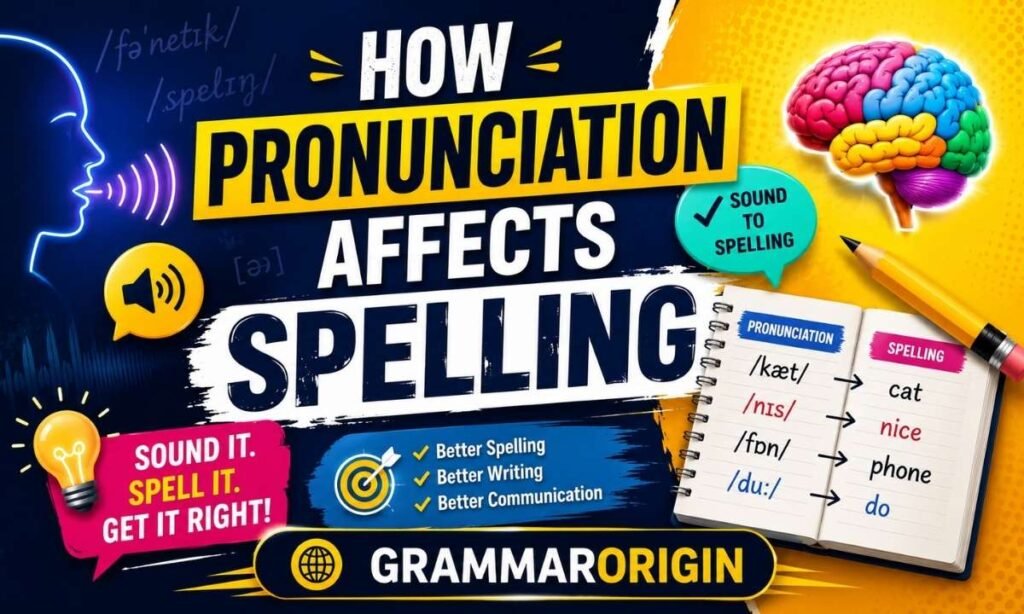
Pronunciation usually explains English’s doubling rule. Compare:
- begin → beginning (stress on the last syllable, so it doubles)
- combat → combating (stress on the first syllable, so it doesn’t)
Both combating and combatting are pronounced the same way: kuhm-BAT-ing. The spelling difference doesn’t change how you say the word — it only reflects which regional convention the writer is following.
Understanding “Combating” and “Combatting” as Verb Forms
Whichever spelling you choose, it functions the same way grammatically.
As a Present Participle
Used in continuous tenses: “Scientists are combating the outbreak.”
As a Gerund
Used like a noun: “Combating pollution requires long-term investment.”
The spelling never changes the grammar — only the region changes the letter count.
Combated vs Combatted (Past Tense)
The same doubling question applies to the past tense, and most guides skip it.
- Combated is the standard American past tense: “The agency combated the outbreak quickly.”
- Combatted is the less common British-leaning variant, mirroring the same doubled-consonant pattern as combatting.
If you’re consistent with combating in the present tense, stay consistent with combated in the past tense — and the same logic applies for combatting and combatted.
Word Family: Combat, Combatant, Combative, Combatively
Related words don’t follow the same spelling debate — most of them settle on a single accepted form.
| Word | Part of Speech | Meaning |
| Combat | Noun/Verb | A fight, or to fight against |
| Combatant | Noun | A person actively involved in fighting |
| Combative | Adjective | Ready or eager to fight or argue |
| Combatively | Adverb | In a combative, confrontational manner |
None of these carry a “double-T” variant — the spelling split is unique to the “-ing” and “-ed” forms of the verb.
AP Style & Other Style Guide Comparison
If you write for a specific publication, the style guide usually settles the choice for you.
| Style Guide | Preferred Spelling |
| AP Style | Combating |
| APA | Combating |
| MLA | Combating |
| Chicago Manual of Style | Combating |
| Oxford Style (UK) | Combatting (combating also accepted) |
Quick answer: For nearly every major American style guide, combating is the expected spelling. British and Commonwealth publications are the main exception.
Real-World Usage Examples
American Context
- Combating inflation
- Combating misinformation
- Combating climate change
British Context
- Combatting knife crime
- Combatting corruption
- Combatting food shortages
The pattern is consistent: match the spelling to your audience, not the other way around.
MORE RELATED POSTS CLICK ME
Case Study: Combating Climate Change vs Combatting Climate Change
A US-based environmental nonprofit and a UK government agency both published reports on the same topic within months of each other.
The American nonprofit wrote: “We are combating climate change through community solar programs.” The UK agency wrote: “The department is combatting climate change via emissions targets.”
Neither was corrected by editors, because both matched their audience’s expected spelling. The lesson holds for any writer: the region you’re writing for decides the spelling, not the topic.
Historical Development of Both Spellings

English spelling wasn’t standardized until dictionaries and school systems formalized it in the 19th and 20th centuries.
- British English kept older habits that doubled consonants more freely, independent of stress.
- American English, shaped by simplification efforts like Noah Webster’s reforms, dropped the extra letter in words like combating, traveling, and canceling.
That historical split is why the American and British forms still diverge today, even though both trace back to the same root verb.
How to Choose the Correct Spelling
Use this quick decision guide:
Choose Combating If:
- You’re writing for an American or international audience
- You’re following AP, APA, MLA, or Chicago style
- You want the more globally recognized spelling
Choose Combatting If:
- Your audience is British or Commonwealth-based
- You’re following UK government or Oxford-style publishing standards
If you’re unsure, default to combating — it’s accepted almost everywhere and rarely looks out of place.
Common Consonant Doubling Rules
Combat isn’t the only word caught in this pattern. The same logic applies elsewhere:
| Word | Stress Pattern | US Spelling | UK Spelling |
| Combat | COM-bat | Combating | Combatting |
| Travel | TRA-vel | Traveling | Travelling |
| Cancel | CAN-cel | Canceling | Cancelling |
| Model | MOD-el | Modeling | Modelling |
Rule of thumb: if the stress falls on the first syllable, American English usually skips the doubled consonant.
Is “Combating” a Word? (Quick Facts & Pronunciation)
Yes — combating is a fully recognized, dictionary-listed word. It’s the present participle of the verb “combat,” pronounced kuhm-BAT-ing, and it’s accepted in every major English dictionary. The same is true for combatting — both are real, correctly spelled words; they just belong to different regional conventions.
Frequently Asked Questions
Is combating or combatting correct?
Both are correct. Combating is standard in American English, while combatting is more common in British English. Neither is grammatically wrong.
Which spelling does AP Style use?
AP Style, along with APA, MLA, and Chicago, uses combating as the standard spelling.
Is combatting a real word?
Yes. Combatting is a recognized, dictionary-listed spelling, used mainly in British and Commonwealth English.
What is the past tense of combat?
The American past tense is combated. The British-leaning variant is combatted, following the same doubling pattern as combatting.
Do combating and combatting mean different things?
No. Both mean the same thing — actively fighting against something. The only difference is spelling, based on regional preference.
Can I use both spellings in the same document?
It’s best not to. Mixing combating and combatting in one piece of writing looks inconsistent. Pick one and stick with it throughout.
Which spelling should I use for international audiences?
Use combating. It’s the more widely recognized form across American, international, and most digital publications.
Conclusion
The choice between combating vs combatting comes down to one thing: your audience. Combating fits American, international, and most style-guide writing, while combatting suits British and Commonwealth publications.
Neither spelling changes the meaning — both describe the act of actively fighting against a problem. Once you know your audience, the correct spelling picks itself.

Muhammad Waqas is an English language teacher and grammar expert with over 8 years of experience helping students and professionals improve their writing skills. He specializes in English grammar, vocabulary, communication, and practical language learning. Through GrammarOrigin, Waqas shares clear, easy-to-understand content that helps readers write and speak English with confidence.