
Swiftie is the correct spelling for a Taylor Swift fan, and “Swifty” isn’t. That settles the Swifty vs Swiftie question in one line. One word is a recognized fandom label, while the other belongs to British slang, old puns and a few famous nicknames.
Still, the Swifty vs Swiftie mix-up keeps showing up in captions, blog posts and search bars, mostly because both words sound identical. This guide covers meaning, origin, real examples and simple rules for each spelling, so you can get it right the first time.
Quick Answer: Swifty vs Swiftie
Write Swiftie when you mean a fan of Taylor Swift. “Swifty” is a separate word with unrelated meanings, so it’s the wrong choice for that job.
The Swifty vs Swiftie choice comes down to three quick checks:
- Talking about someone who loves Taylor Swift’s music? Use Swiftie.
- Need the plural? It’s Swifties.
- Meaning something quick, or a bit of British-style slang? That’s the only place swifty belongs.
Quick facts for reference:
- Swiftie is a noun that means a fan of the American singer-songwriter Taylor Swift.
- The plural is Swifties, and the word starts with a capital S in careful writing.
- The name grew from fan communities in the late 2000s and early 2010s, and it was in published media by 2011.
- Swiftie is listed in the Oxford Dictionary of English and Dictionary.com, and it made Oxford’s 2023 Word of the Year shortlist.
- Swifty is an informal word for something quick, a quick drink, a trick or a nickname.
- The fan name is the same in American and British English.
Example: My cousin flew to Chicago just to see the tour, she’s a total Swiftie.
What Does “Swiftie” Mean? (Real Definition and Usage)
A Swiftie is a devoted fan of singer-songwriter Taylor Swift. It works as a countable noun, and lots of fans now use it as an identity label too.
Wikipedia describes Swifties as one of the largest and most engaged fandoms in pop culture. The Oxford Dictionary of English defines the word as an enthusiastic fan of the singer, which is about as official as fan slang gets.
Example: Three Swifties in our office started a lunchtime playlist club.
Definition in simple terms
A Swiftie is someone who does more than press play. They read into lyrics, follow album releases and often chat with other fans online. Taylor Swift’s fanbase is huge, but the name Swiftie is the label fans chose for themselves.
Oxford notes that words like fandom, die-hard, hardcore and self-proclaimed often sit beside it. That tells you the label carries real enthusiasm, not just casual listening.
Example: He calls himself a Swiftie, though he only knows the big hits.
Origin of the Term “Swiftie”
The word grew out of Taylor Swift’s early fan communities, and it was already appearing in published media by 2011. Nobody can point to one clean “first use” date, which is normal for slang born online.
Example: Old forum threads from the late 2000s already had fans calling each other Swifties.
How it started
Fans took the surname Swift and added the friendly -ie ending. It’s the same move behind groupie and Trekkie, both of which turn a name or interest into a warm group label.
Message boards and early social platforms did the rest. The name spread because people kept using it with each other.
Example: Groupie plus Swift gives you Swiftie.
Why it stuck
It’s short, easy to say and easy to type. It also feels welcoming, since you don’t need to know every song to use it.
Big tours and constant fan activity kept the word in front of people. Repetition made it permanent.
Example: New listeners pick up the word fast and start saying Swiftie within a week.
Also Read This Students vs Student’s vs Students: What’s the Difference?
Why “Swiftie” Became a Cultural Label
Swiftie became a cultural label because the fandom grew big enough for media, dictionaries and brands to treat the name as standard vocabulary. Dictionary.com lists it as a noun for a fan of her music.
Oxford also put it on its 2023 Word of the Year shortlist, and the wave of coverage around The Eras Tour pushed it into everyday speech. Journalists now use it without explanation. It also sits beside other well-known fan names, like Beliebers for Justin Bieber and the ARMY for BTS.
Example: A headline reading “Swifties line up overnight” needs no translation for most readers.
What Does “Swifty” Mean? (Correct Linguistic Meaning)
Swifty is an informal word built from “swift,” meaning fast or sudden. It has nothing to do with Taylor Swift’s fandom.
You’ll mostly meet it in British or Australian speech, and even there it’s uncommon. Most American readers wouldn’t recognize it.
Example: Fancy a swifty before we head home?
Example usage
In casual British talk, a swifty can be a quick drink. “Pulling a swifty” means pulling a sneaky trick or a sudden move.
Both uses are playful and spoken, so they rarely appear in formal writing.
Example: He pulled a swifty and left the meeting before anyone noticed.
Important point
If you want the adverb for “in a fast way,” the word is swiftly, not swifty. That’s a different mistake from the fan-name mix-up, but it happens just as often.
Keep three words apart in your head: swift (adjective), swiftly (adverb) and swifty (slang).
Example: She replied swiftly, not “swifty,” and the sentence reads cleanly.
Other Meanings of Swifty (Names, Slang and Puns)
Swifty also turns up as a nickname and in pop culture. Swifty Lazar (1907 to 1993) was an American talent agent, and Swifty McVay (born 1974) is a rapper from the group D12.
Then there’s the Tom Swifty, a pun where the adverb matches what was said. It’s named after Tom Swift, the hero of a long-running adventure book series. A 1935 Western film called Swifty exists as well.
Example: A classic Tom Swifty goes, “Pass the pencil sharpener,” said Tom pointedly.
Why People Confuse Swifty and Swiftie
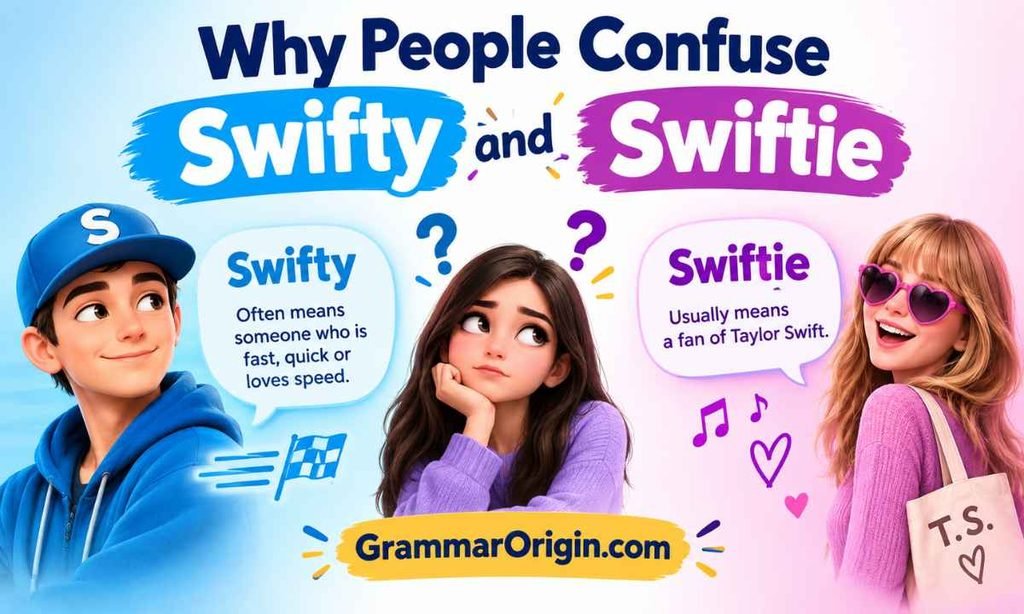
People confuse the two because they sound the same, look almost the same and get repeated online without a second glance. It’s an easy slip, not a sign of bad spelling.
Example: A tired writer types “Swifty” at midnight and never catches it.
Sound similarity
Both words end in the same long “ee” sound. English also swaps -y and -ie constantly, as in doggy and doggie, so your ear has no way to pick the winner.
Example: Say it out loud: “Swiftie” and “swifty” are indistinguishable.
Swifty and Swiftie Pronunciation
Both are pronounced SWIFT-ee. There’s no stress difference, no vowel change and no regional twist that separates them.
That’s why spelling has to carry the meaning here. Speech can’t.
Example: Read “SWIFT-ee” on a phone call and you still won’t know which spelling the speaker meant.
Typing errors
Fast typing makes “ie” and “y” easy to swap. Autocorrect and older spellcheck lists may not know Swiftie, so they can flag it or push you toward another word.
If a tool underlines the word, check it before you accept the change.
Example: A phone changes “Swiftie” mid-text, and the message goes out as “Swifty.”
Social media repetition
Once a wrong spelling appears in a viral caption or a comment thread, people copy it. Others then assume it must be right because they’ve seen it a hundred times.
Lowercase and casual spellings spread even faster, since nobody proofreads a quick post.
Example: A meme caption uses “swifty,” and ten replies repeat it.
Search engine behavior
People often search with the wrong spelling, and search engines usually connect it to the fan term because the intent is clear. That helps searchers find answers, but it also keeps the confusion alive.
Comparison searches like this one show that many people are checking, not guessing.
Example: Someone types “swifty concert tickets” and still sees Taylor Swift results.
Swifty vs Swiftie: Key Differences Explained
The main difference is simple: Swiftie names a person in a fandom, while swifty is slang tied to speed, tricks or a nickname. Everything else follows from that.
Example: “She’s a Swiftie” describes a fan, and “that was a swifty” describes a quick move.
Meaning difference
Swiftie means a Taylor Swift fan. Swifty means quick, a quick drink or a sudden trick, depending on who’s talking.
Example: A Swiftie owns the albums, while a swifty is what you order before leaving.
Context difference
Swiftie lives in music, pop culture and fan communities. Swifty lives in informal British-style talk, puns and nicknames.
Example: A concert review uses Swiftie, and a pub chat might use swifty.
Cultural relevance
Swiftie is recognized worldwide, listed in dictionaries and used by media. Swifty has no comparable cultural weight for fans.
Example: Newsrooms print Swiftie without hesitation.
Accuracy in writing
Using the wrong one can make a careful piece look rushed. Readers who know the fandom will notice right away.
Example: “Swifties filled the stadium” is accurate, and “Swifty fans filled the stadium” isn’t.
Also Read This Students vs Student’s vs Students: What’s the Difference?
Comparison Table: Swifty vs Swiftie
The table below shows the Swifty vs Swiftie differences side by side, so you can scan and move on.
| Feature | Swiftie | Swifty |
| Meaning | A fan of Taylor Swift | Informal: quick, a quick drink, a trick |
| Word type | Noun | Informal slang (also nicknames) |
| Plural | Swifties | Rarely needed |
| Capitalization | Capital S in careful writing | Lowercase as slang, capital for names |
| Region | Global | Mostly British and Australian slang |
| Dictionary status | Oxford Dictionary of English, Dictionary.com | Informal, listed in some UK/Australian sources |
| Right for fans? | Yes | No |
| Example | “She’s a proud Swiftie.” | “Let’s grab a swifty.” |
Example: If your sentence is about concert fans, the table’s answer is always Swiftie.
Which Spelling Should You Use?
Use Swiftie for fans and swifty only for slang or names. If you’re unsure, pick Swiftie and you’ll be right in almost every case.
Example: “The Swiftie community organized a charity drive” is safe in any publication.
Use “Swiftie” if:
You’re writing about a Taylor Swift fan, the fandom, fan events or fan culture. That covers captions, articles, emails and product pages.
Example: “Every Swiftie I know has a favorite era.”
Use “Swifty” if:
You’re quoting British slang, naming someone called Swifty or explaining a Tom Swifty pun. In those cases, the word is correct, but the context should be obvious.
Example: “Swifty Lazar was a famous agent” uses Swifty correctly, because it’s a person’s nickname.
Global writing tip
The fan word has no UK versus US split, so Swiftie works everywhere. If you use the slang swifty for an American audience, add a short explanation.
Example: Writing for a US site? Use Swiftie for fans, and explain any slang “swifty.”
Common Mistakes with Swifty vs Swiftie
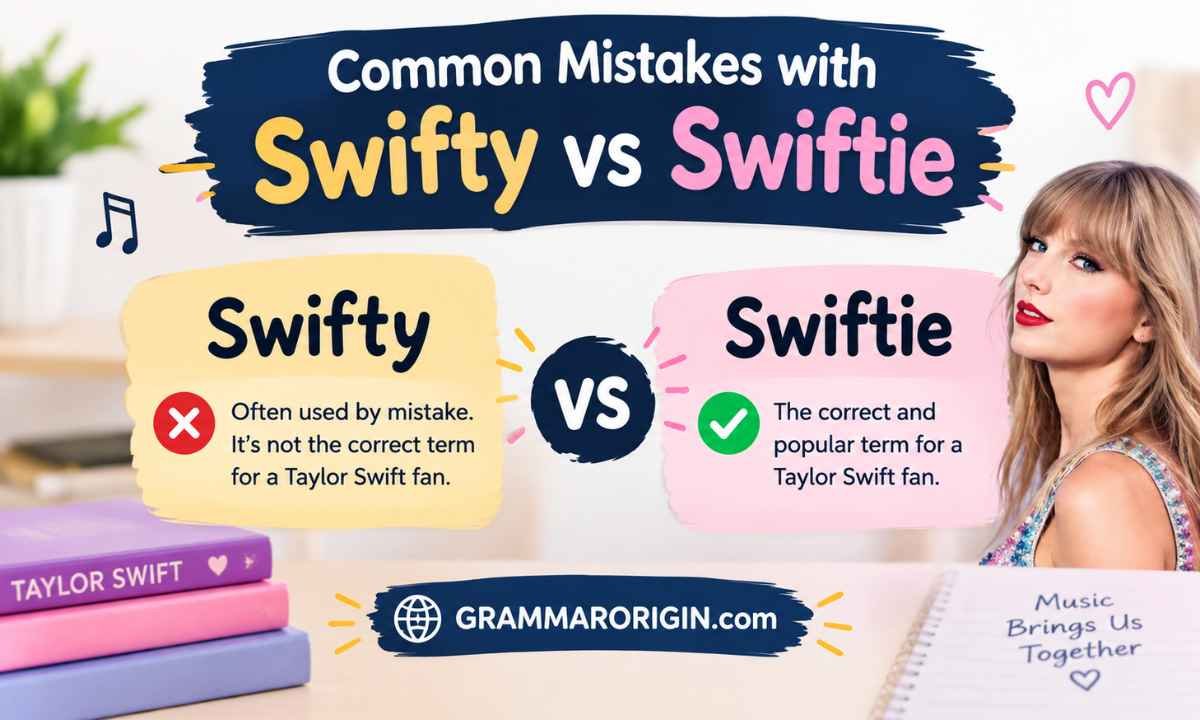
Most errors fall into four patterns, and all of them are easy to fix. Knowing them helps you proofread faster.
Example: A single Swifty in a headline can spoil a strong article.
Mistake: using “Swifty” for fans
This is the big one. Swifty for a fan is incorrect in American English, British English and everywhere else.
Example: Wrong: “He’s a Swifty.” Right: “He’s a Swiftie.”
Mistake: ignoring capitalization
Swiftie comes from a proper name, so careful writing uses a capital S. Lowercase is common on social media, but it looks casual in formal copy.
Example: Write “Swiftie,” not “swiftie,” in a news story.
Mistake: assuming regional spelling
Some writers think the UK spells it one way and the US another. They don’t, since the fan name is the same in both.
Example: A London blog and a Texas blog both write Swiftie.
Mistake: mixing both meanings in one article
Using swifty as slang and Swiftie as the fan name in the same piece confuses readers. If you must use both, define each one early.
Example: “A quick swifty before the show” beside “Swiftie” needs a short clarifying note.
Swifty vs Swiftie in Real-World Usage
In practice, Swiftie dominates almost every public setting, while swifty stays in casual talk and nicknames. The Swifty vs Swiftie split becomes obvious once you look at where each appears.
Example: Scroll any fan account and you’ll see Swiftie in bios far more than anything else.
Social media usage
Fans write Swiftie in bios, hashtags and replies, sometimes in lowercase. Typos happen, but the accepted form is the one with -ie.
Example: “proud swiftie since day one” is casual but still correct in spelling.
News headlines
Outlets capitalize Swiftie and use it without explanation. Headlines rely on readers already knowing it.
Example: “Swifties Rally Behind New Album Release.”
Emails and blogs
Keep it friendly but correct. A wrong spelling in a newsletter is small, but it can still cost you trust.
Example: “Calling all Swifties: our playlist night is Friday.”
Formal writing
In essays, reports or research, capitalize it and, if your audience is mixed, define it on first mention.
Example: “Swifties, the fandom of Taylor Swift, are known for high participation.”
SEO Insight: Swifty vs Swiftie Search Behavior
Most people searching this topic want a fast spelling check, and a smaller group wants the meaning of Swifty. A good page answers both without making anyone dig.
Example: Someone searching “swifty or swiftie” wants one clear word in the first line.
User intent breakdown
Three intents show up: checking the correct spelling, learning what swifty means and understanding how the fan name started. All three are informational.
Example: “What does Swifty mean?” and “is it Swiftie or Swifty” are different searches with different needs.
Keyword strategy insight
Lead with the correct term, mention the misspelling once or twice in context and support it with related terms like Taylor Swift, fandom, fanbase and Oxford Dictionary of English. Don’t stuff the wrong spelling everywhere.
Example: A headline pairing “Swifty vs Swiftie” with “correct spelling” matches how people actually search.
Why Swiftie dominates SEO
Swiftie is tied to a huge, active fandom with constant news coverage, dictionary listings and fan content. That gives search engines clear, steady signals about what it means.
Swifty has many small, unrelated meanings, so no single one dominates.
Example: A search for “Swiftie” returns fandom pages, while “swifty” returns a mix of names and slang.
Case Study: Viral Confusion on Social Media
Here’s an illustrative scenario, not a documented incident, showing how one wrong word can snowball. It mixes together things that often happen to small publishers.
Example: A tour recap uses “Swifty” in every paragraph.
Situation
A small music blog publishes a tour recap and uses “Swifty” throughout, including the headline. The writer typed by ear and never proofread the spelling.
Example: The headline reads “Thousands of Swifty Fans Sing Along.”
What happened
A reader screenshots the headline and shares it with a joke. Other accounts pick it up, and the comments fill with corrections.
Example: The top reply says, “It’s Swiftie, not Swifty.”
Result
The post gets attention, but not the kind the blog wanted. Readers start doubting the writer’s expertise, and the extra visitors don’t stay.
Example: Fewer readers subscribe after seeing “Swifty” in the screenshot.
Lesson
Check fandom names, proper nouns and spellings before publishing. A two-minute proofread beats a public correction.
Example: Searching “Swiftie meaning” before posting would have caught it.
Real Usage Examples
Seeing the words in real sentences is the fastest way to lock in the rule. Here are correct and incorrect uses.
Example: “That Swiftie knows every bridge lyric.”
Correct examples (Swiftie)
- “Mia is a longtime Swiftie.”
- “Several Swifties joined the watch party.”
- “Every Swiftie’s playlist looks a little different.”
- “Fans call themselves Swifties with pride.”
Correct examples (Swifty)
- “Let’s have a swifty before the train.”
- “He pulled a swifty on his brother.”
- “Swifty Lazar was a well-known talent agent.”
Incorrect example
- Wrong: “She’s a huge Swifty.” Right: “She’s a huge Swiftie.”
- Wrong: “The Swifty fandom is growing.” Right: “The Swiftie fandom is growing.”
- Wrong: “She answered swifty.” Right: “She answered swiftly.”
Why This Difference Matters More in 2026
It matters more now because AI tools, search summaries and social feeds repeat whatever spelling they see. One wrong word can spread further than it used to.
Correct spelling also signals that you know your topic, and readers and search engines both notice.
Example: An AI summary that sees “Swiftie” used consistently will repeat it correctly.
Swifty fast
People searching “swifty fast” usually want a word meaning quick, and the standard choice is swiftly for actions or swift for things. Swifty as slang exists, but it’s informal and not a safe pick for formal writing.
Example: “She finished swiftly” beats “she finished swifty fast” in any serious piece.
Swifty synonym
If you need a synonym for swift or swiftly, try quick, rapid, speedy, brisk, prompt or fleet. None of those is a stand-in for Swiftie, which stays reserved for fans.
Example: “The team responded promptly” says the same thing without the slang.
Frequently Asked Questions
Is it Swifty or Swiftie?
It’s Swiftie when you mean a Taylor Swift fan. Swifty is a different word, usually informal slang or a nickname, and it isn’t the fan name.
Swifty vs Swiftie: what’s the difference?
Swiftie is a fan of Taylor Swift. Swifty is slang for something quick, a quick drink or a trick, or part of a person’s nickname.
Is Swifty a real word?
Yes, but it’s informal and mostly British or Australian slang. It also appears in nicknames like Swifty Lazar and in the Tom Swifty pun.
What’s the plural of Swiftie?
The plural is Swifties. For possession, use Swiftie’s for one fan and Swifties’ for a group of fans.
Should Swiftie be capitalized?
In careful writing, yes, because it comes from the proper name Swift. Lowercase is common in casual posts, but formal copy should use a capital S.
Can anyone call themselves a Swiftie?
Yes. The word describes anyone who’s a fan of Taylor Swift’s music, and you don’t need to attend concerts or know every song.
Did Oxford recognize the word Swiftie?
Yes. The Oxford Dictionary of English defines Swiftie as an enthusiastic fan of Taylor Swift, and the word was also on Oxford’s 2023 Word of the Year shortlist.
Summary
Swiftie is the word for a Taylor Swift fan, and Swifty is slang, a nickname or a pun. Once you separate the two meanings, the Swifty vs Swiftie question stops being confusing.
Capitalize it, use Swifties for the plural and keep swiftly for speed. A quick proofread is all it takes to keep the right word in place.

Muhammad Waqas is an English language teacher and grammar expert with over 8 years of experience helping students and professionals improve their writing skills. He specializes in English grammar, vocabulary, communication, and practical language learning. Through GrammarOrigin, Waqas shares clear, easy-to-understand content that helps readers write and speak English with confidence.