
You’ve typed a message that says “in process,” then second-guessed yourself and changed it to “in progress” — and neither one felt fully right. It’s one of those pairs that looks almost identical but can quietly change how professional, clear, or confusing your writing sounds.
This guide breaks down exactly when to use in process vs in progress, with real examples from job applications, work status updates, and everyday writing .
What Do “In Process” and “In Progress” Really Mean?
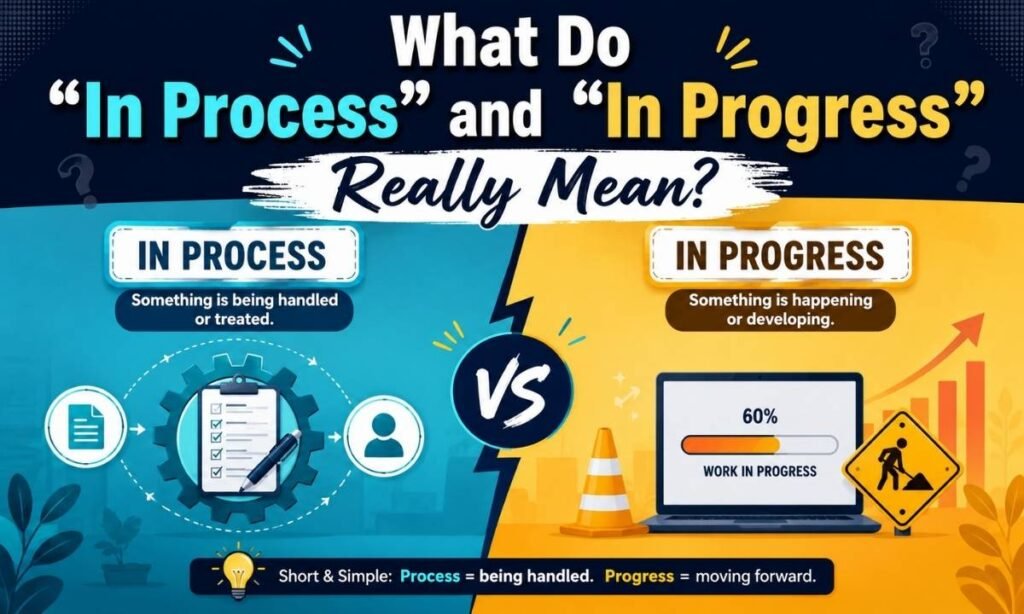
The difference is subtle but useful. “In process” points to a procedure running in the background — an application, a payment, an order. You don’t always see anyone actively working on it; it’s just moving through its stages.
“In progress” points to visible, active effort. A report, a project, or a repair that’s “in progress” has someone hands-on, working on it at this moment.
Both phrases describe something unfinished. The real difference is how it’s unfinished — through a system, or through active work.
Side-by-Side Comparison Table
| Feature | In Process | In Progress |
| Core meaning | Moving through steps or a system | Actively being worked on |
| Feels like | A background procedure | Visible, hands-on effort |
| Common in | Approvals, orders, applications | Projects, tasks, creative work |
| Tone | Slightly formal | Everyday, natural |
| Example | “Your refund is in process.” | “Your report is in progress.” |
Use this table as a quick check whenever you’re unsure which phrase fits your sentence.
Dictionary Definition: What Cambridge & Merriam-Webster Say
Standard dictionaries treat “process” and “progress” as close in meaning, but not identical. Process generally refers to a series of steps taken to reach a result. Progress generally refers to forward movement toward a goal.
That root difference explains the modern split. “In process” leans on the steps meaning of process. “In progress” leans on the movement meaning of progress.
Dictionaries don’t draw a hard line between the two phrases — usage and context do most of the work in deciding which one fits better.
Which One Is More Common? (Usage Frequency Over Time)
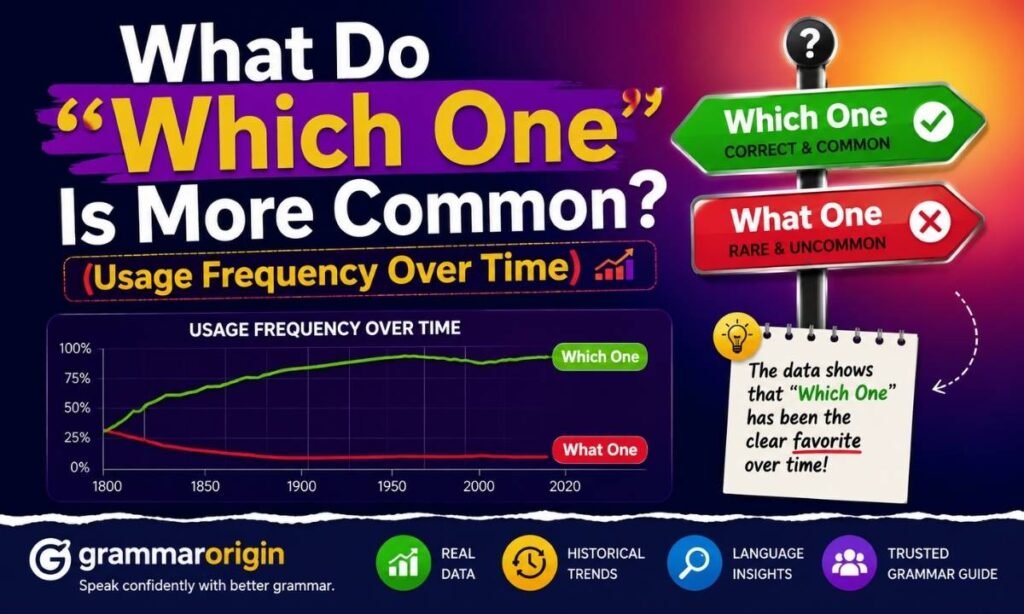
“In progress” is far more common than “in process” in everyday English, and has been for a long time.
Language usage data going back centuries shows “in progress” consistently used more often, likely because it fits a wider range of situations — from casual conversation to formal writing.
“In process” still shows up regularly, but mostly in specific fields like manufacturing, law, and administration, where formal procedures are the norm.
“In the Process Of” vs “In Process” — Are They the Same?
No — “in the process of” and “in process” are used differently.
“In the process of” is followed by a verb and describes an action someone is doing: “I’m in the process of renovating my kitchen.” It puts focus on the person doing the work.
“In process” stands alone and describes the state of a thing, not a person: “The renovation is in process.”
Both are grammatically correct. The choice depends on whether you want to highlight the person or the thing.
When to Use “In Progress” vs. “In Process” (Context-Based Guide)
Use “in progress”
when a person is actively doing the work:
- “The design is in progress.”
- “Repairs are in progress.”
- “Her thesis is in progress.”
Use “in process”
when something is moving through a formal system:
- “Your visa is in process.”
- “The claim is in process.”
- “The shipment is in process.”
A simple test: if you can picture someone actively working on it right now, use in progress. If it’s just moving through steps in the background, use in process.
Comparison Examples
- In progress: The designer is sketching your logo right now.
- In process: Your invoice is moving through the approval system.
- In progress: The essay is half written.
- In process: The application is being reviewed by an automated system.
- In progress: The update is being coded by the developer.
- In process: The update is being tested through several automated stages.
Notice the pattern — in progress points to a person, in process points to a system.
MORE RELATED POSTS CLICK ME
How Different Industries Use Each Phrase
Technology:
Developers say a feature is “in progress” when they’re actively coding it. A deployment moving through automated pipelines is often “in process.”
Business & operations:
Contracts and procurement requests are usually “in process,” since they follow fixed approval steps.
Customer support:
A ticket someone is actively handling is “in progress.” A refund moving through a payment system is “in process.”
Manufacturing:
Items moving through production stages are described as “in process” — this is where the accounting term “work in process” comes from.
Academic work:
Research and writing are almost always described as “in progress,” since they involve ongoing human effort.
“In Progress” vs “In Process” in Project Management Tools (Jira, Trello, Asana)
Project management tools almost always use “In Progress,” not “in process,” as a status label.
Tools like Jira, Trello, and Asana use “In Progress” as a standard column name for tasks someone is actively working on. It’s simple, clear, and fits any type of task.
“In process” rarely appears in these tools because it suggests a fixed procedure, while task boards are built around flexible, active work — which is exactly what “in progress” communicates.
If you’re labeling tasks for a team, “in progress” is almost always the safer, clearer choice.
Work in Process vs. Work in Progress (Accounting & Manufacturing)
In accounting, “work in process” and “work in progress” refer to unfinished goods, but they’re used in different industries.
“Work in process” is the term manufacturers use for goods still moving through production — raw materials that haven’t yet become a finished product. It’s tracked as inventory on a company’s balance sheet.
“Work in progress” is more common in construction and long-term projects. It refers to assets that take much longer to complete, like a building under construction.
Both terms cover unfinished business assets. The difference is mainly about industry convention and how long the item stays unfinished — short production cycles use “in process,” while long-term builds use “in progress.”
In Process vs. In Progress: Job Application & Workday Status
“In Process” and “In Progress” mean the same thing on most job application portals — your application hasn’t been rejected yet.
Many companies, including those using Workday, show “In Progress” as a general status. It simply means your application is still active in their system, not that a recruiter is actively reviewing it right now.
Don’t read too much into either label. At any given time, hundreds of applications for the same role can show the same status. It’s not a signal of how close you are to an interview.
If you want a clearer update, following up directly with the hiring team is more useful than trying to interpret the status label itself.
Is “In Process” Correct in British English?
“In process” is used less often in British English, especially in the phrase “work in process.”
British English speakers generally prefer “work in progress” in almost every context, including manufacturing. “Work in process” can sound like a mistake to a British reader, even though it’s standard usage in American business and manufacturing writing.
If you’re writing for a British audience, “in progress” is the safer, more natural choice in nearly every case.
Grammar Rules: How to Use Each Phrase Correctly
Both phrases usually follow a form of the verb “to be”:
- is in progress / are in progress
- is in process / are in process
They can also follow verbs like remains, continues, or stays:
- “The negotiation remains in progress.”
- “The claim stays in process.”
As adjectives before a noun, both phrases are typically hyphenated:
- “An in-progress project.”
- “An in-process order.”
Keep the phrase consistent within one piece of writing. Switching between “in process” and “in progress” for the same task can confuse readers.
Does “In-Progress” Have a Hyphen?
Yes — “in-progress” takes a hyphen when it comes before a noun.
Example: “This is an in-progress draft.” Here, “in-progress” describes the noun “draft,” so it’s hyphenated.
Without a noun directly after it, no hyphen is needed: “The draft is in progress.”
The same rule applies to “in-process”: hyphenate before a noun, skip the hyphen everywhere else.
MORE RELATED POSTS CLICK ME
Is There a Synonym for “In Process” or “In Progress”?
Common synonyms include underway, ongoing, and happening.
For “in process,” close synonyms are underway and ongoing — both suggest something moving through steps.
For “in progress,” similar words are ongoing, happening, and unfolding — all pointing to active, visible work.
None of these synonyms are a perfect match. Each carries a slightly different shade of formality, so context still matters more than the word itself.
Common Mistakes to Avoid
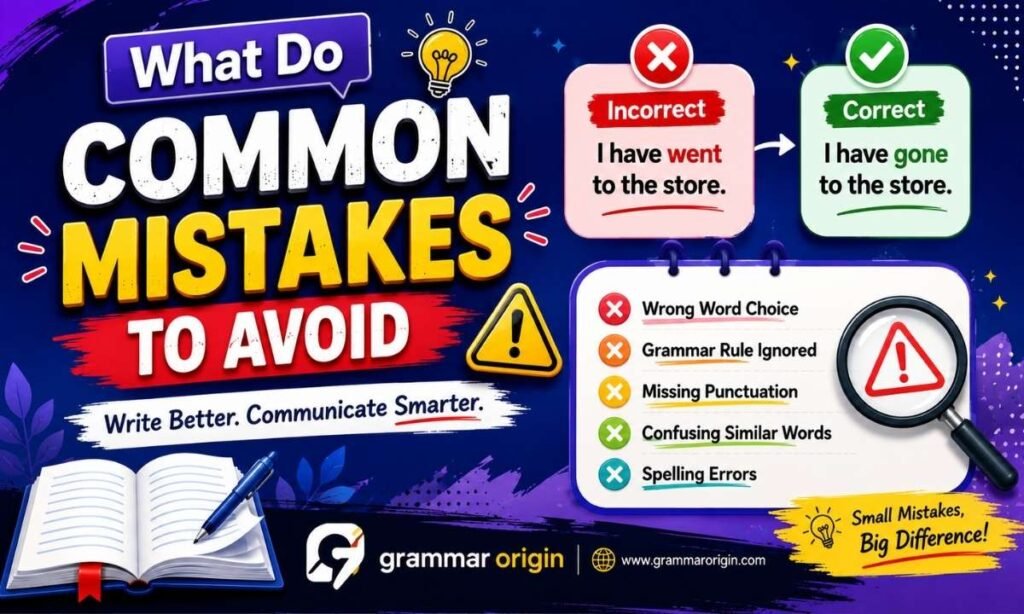
Mistake 1: Using “in process” for active human work.
❌ “I’m writing the report, it’s in process.”
✔️ “I’m writing the report, it’s in progress.”
Mistake 2: Using “in progress” for automated system steps.
❌ “Your refund is in progress.”
✔️ “Your refund is in process.”
Mistake 3: Switching between both terms in the same document.
Pick one and stay consistent, especially in team communication.
Mistake 4: Forgetting the hyphen before a noun.
❌ “An in progress project.”
✔️ “An in-progress project.”
Quick Memory Tricks
Progress = action. Process = steps.
If you can picture a person actively doing the work, use “in progress.” If it’s moving through a system quietly, use “in process.”
Quick test: Is someone doing it right now? Yes → in progress. No → in process.
Frequently Asked Questions
What does “in progress” mean?
It means something is actively being worked on right now, with visible effort or action happening.
What does “in process” mean?
It means something is moving through a set of steps or a formal system, often without direct human effort at that exact moment.
Is “in process” the same as “in progress” on a job application?
Yes, in most cases. Both usually mean your application is still active and hasn’t been rejected — not that someone is reviewing it right this second.
Does “in-progress” need a hyphen?
Only before a noun, like “an in-progress project.” On its own, after “is” or “are,” no hyphen is needed.
Is “work in process” correct in British English?
Not usually. British English strongly favors “work in progress” in almost every context, including manufacturing.
What’s the difference between work in process and work in progress in accounting?
Work in process refers to goods still moving through short production cycles. Work in progress refers to long-term assets, like construction projects, that stay unfinished for much longer.
Why do Jira, Trello, and Asana use “In Progress” instead of “In Process”?
Because “in progress” fits any type of active task, while “in process” suggests a fixed procedure — which doesn’t match how flexible task boards work.
Are “in process” and “in progress” interchangeable?
Not always. They often overlap, but “in progress” fits active human work best, while “in process” fits system-driven steps best.
Final Thoughts
Choosing between in process and in progress comes down to one simple question: is someone actively working on it, or is it moving through a system? In progress fits active, hands-on work. In process fits steps, procedures, and formal workflows.
Once you know this difference, you’ll never have to second-guess yourself again — whether you’re updating a project, checking a job application, or writing a status report.

Muhammad Waqas is an English language teacher and grammar expert with over 8 years of experience helping students and professionals improve their writing skills. He specializes in English grammar, vocabulary, communication, and practical language learning. Through GrammarOrigin, Waqas shares clear, easy-to-understand content that helps readers write and speak English with confidence.