
You’re about to hit send on an email, and suddenly you pause. Is it goodbye, good bye, or good-bye? This small hesitation trips up even confident writers, and autocorrect doesn’t always help.
This guide gives you the direct answer, the real history behind the confusion, and clear examples for every situation — from casual texts to formal writing.
Why This Word Causes So Much Confusion
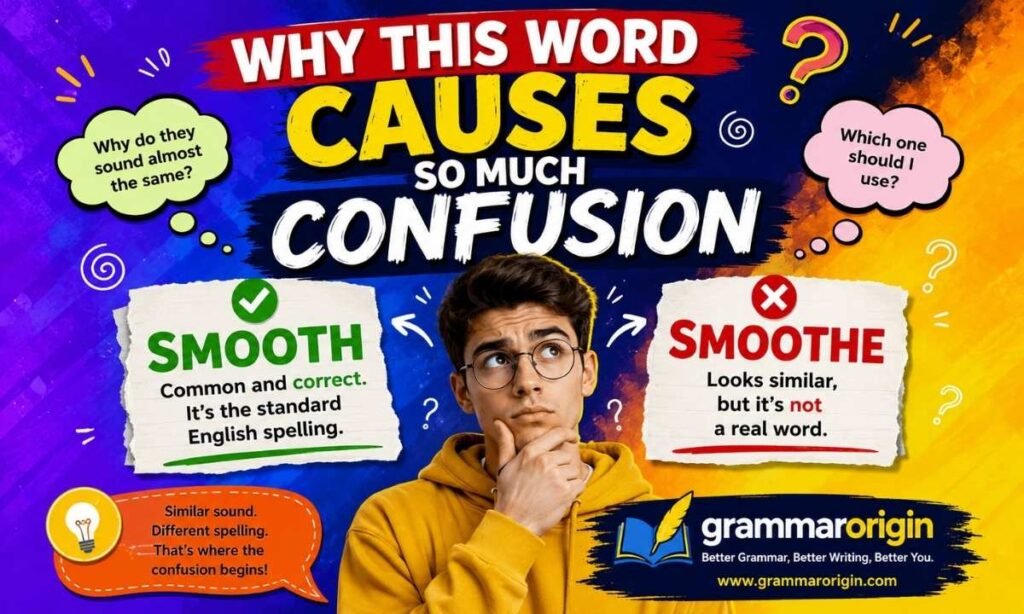
The word looks like two separate terms joined together. Writers see “good” and “bye” and assume they should stay apart, or at least connect with a hyphen.
Old books add to the problem. Many classic texts use good-bye, so readers assume that spelling is still standard today. It isn’t.
Autocorrect makes things messier too. Some apps flag good bye as an error, while others let it pass depending on their dictionary settings.
The Direct Answer: Goodbye Is Correct
Goodbye is the only correct spelling in modern English. It’s written as one word, with no space and no hyphen.
Here’s the quick breakdown:
- Goodbye — correct and standard everywhere
- Good-bye — outdated, but historically valid
- Good bye — incorrect in current usage
If you remember one rule from this entire article, remember this: goodbye is a single word.
What Happened to Good-Bye and Good Bye?
Good-bye
was the common spelling throughout the 1800s and early 1900s. Printers used hyphens to help readers recognize compound words at a glance.
As readers grew familiar with the merged spelling, that visual aid stopped being necessary. Editors dropped the hyphen, and by the mid-1900s, goodbye had taken over in nearly all published writing.
Good bye
written as two separate words, was never a recognized standard. It shows up mostly as a typing mistake, not a legitimate variant. Dictionaries have never listed it as correct.
Is “Good By” (No Hyphen, No Second Syllable) Ever Correct?
No. Good by is not a real spelling of this word at all.
This version usually comes from a typo or confusion with the unrelated word by, which refers to location or proximity (“standing by the door”). It has no connection to the farewell expression.
If you see “good by” anywhere, treat it as a spelling error, not a stylistic choice.
The Real History: From “God Be With Ye” to Goodbye
Goodbye didn’t start as a simple farewell. Its roots go back to a full blessing.
The original phrase was “God be with ye,” used in English speech as far back as the 1500s. Over generations, everyday pronunciation wore the phrase down.
The shift looked something like this:
- God be with ye
- God b’wye
- Good-bye
- Goodbye
Speakers later reshaped the first syllable to match the word good, influenced by greetings like good morning and good night. That’s why goodbye looks like “good” plus “bye,” even though it never actually meant that.
READ MORE RELATED POST SMOOTH VS SMOOTHE
What Dictionaries and Style Guides Say (With Real Sources)
Every major dictionary lists goodbye as the standard, correct spelling.
- Merriam-Webster lists goodbye as the primary entry, with good-bye as a secondary variant.
- The Cambridge Dictionary defines goodbye as the standard modern form.
- Oxford Learner’s Dictionaries treats good-bye as a dated alternative.
AP Style, Chicago, and MLA
The AP Stylebook recommends goodbye for journalism and media writing, without a hyphen.
The Chicago Manual of Style follows the same preference, favoring the closed compound in professional and academic writing.
MLAdoesn’t specify a farewell spelling directly, but academic papers that follow MLA formatting typically default to the dictionary standard: goodbye.
Goodbye or Good-Bye in UK English?
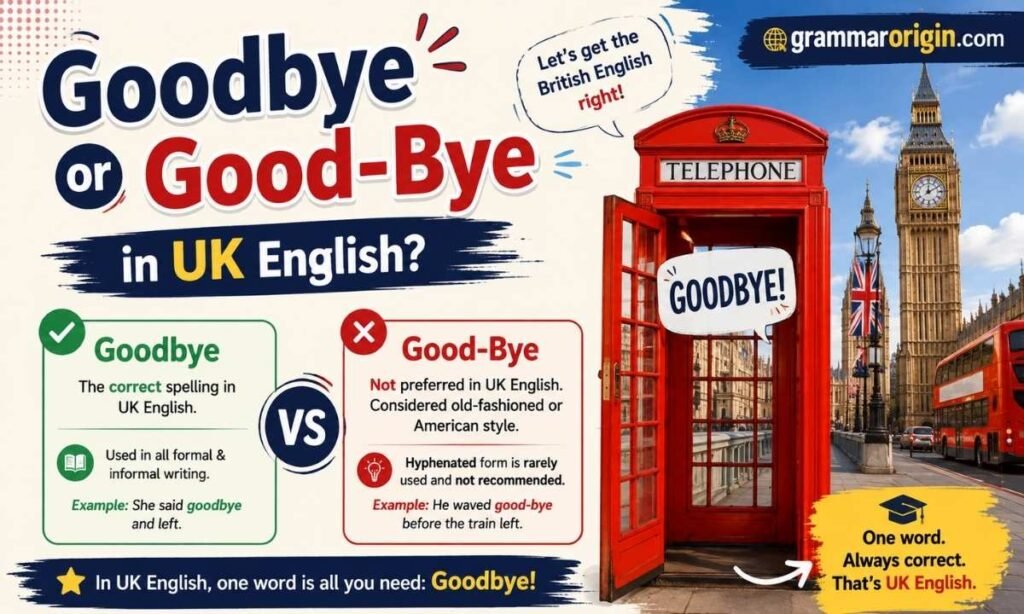
British English and American English do not treat this word differently. Both prefer goodbye as the standard spelling.
You may occasionally spot good-bye in older British texts or formal letters, but it carries the same “dated” status it has in American English. Casual British alternatives like cheerio or ta-ta exist, but they’re separate words entirely, not spelling variants of goodbye.
Goodbye vs. Bye-Bye: What’s the Difference?
Bye-bye is not a misspelling of goodbye — it’s a separate, informal variation.
It’s commonly used with children, in playful conversation, or between close friends. Using bye-bye in a business email would feel out of place, but goodbye works in almost any context.
Think of it this way: goodbye is neutral and works everywhere, while bye-bye is casual and best kept for informal, friendly exchanges.
Goodbye in a Relationship: What Does It Really Mean?
In a relationship, goodbye can carry more emotional weight than a simple sign-off. Saying “goodbye” instead of “see you later” or “bye” often signals something more final.
Partners sometimes use goodbye deliberately during a breakup or a difficult conversation, because it implies closure rather than a temporary parting. In everyday, healthy communication, though, couples usually stick to lighter farewells like “bye” or “talk soon.”
Context and tone matter more than the word itself. “Goodbye, I love you” reads very differently from a flat “Goodbye.”
How Gen Z Says Bye: Texting and Slang Trends
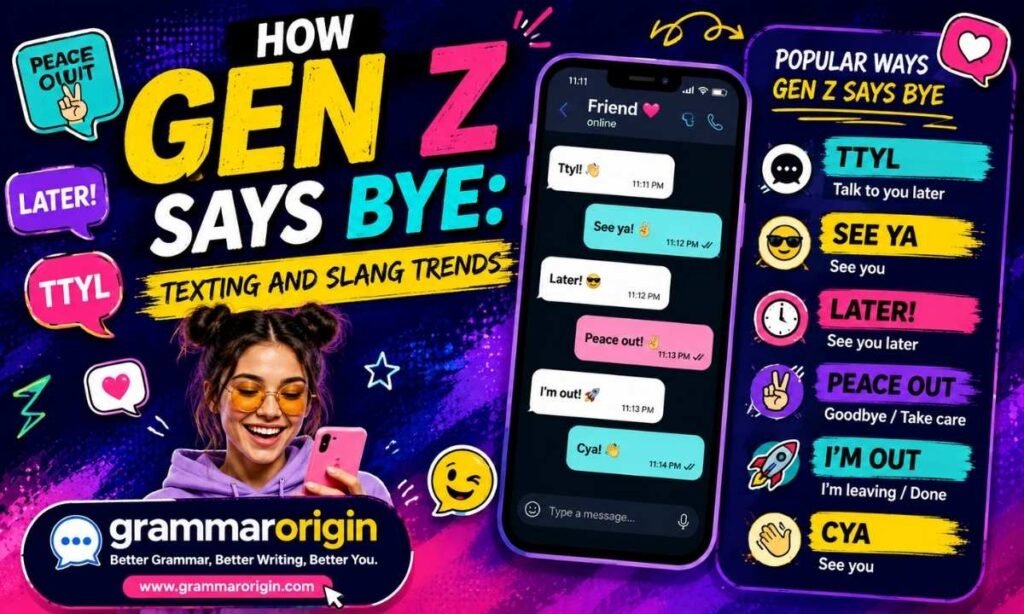
Younger writers rarely use the full word goodbye in casual texting. Shorter, faster alternatives dominate group chats and social media.
Common Texting Shortforms
- bye
- cya
- gtg (got to go)
- ttyl (talk to you later)
Slang and Ironic Usage
Gen Z also uses goodbye sarcastically or dramatically online, often paired with emojis like 👋 or 💀 to express exaggerated finality (for example, reacting to embarrassing news with “goodbye” instead of an actual farewell). This playful, ironic tone is common on platforms like TikTok and Twitter/X, but it doesn’t change the correct spelling — it’s just a shift in usage.
Goodbye in Different Writing Contexts
How you use goodbye changes with the setting, even though the spelling never does.
Professional Writing
In workplace emails, goodbye is safe and neutral. Pairing it with a closing line feels more polished: “Thank you for your time. Goodbye.”
Formal Writing
Formal letters and official announcements rarely use goodbye on its own, but when they do, it’s always the single-word spelling.
Casual Conversations
In texts and everyday chats, goodbye often shortens to bye or gets paired with softer phrasing like “goodbye for now.”
Creative Writing and Dialogue
Fiction writers sometimes choose good-bye deliberately to signal a period setting or an older narrator’s voice. Outside that stylistic choice, goodbye remains standard in modern dialogue.
READ MORE RELATED POST SMOOTH VS SMOOTHE
Common Myths About Saying Goodbye
Myth: Goodbye Sounds Too Formal
Goodbye isn’t inherently stiff. It works in casual texts, friendly emails, and formal letters alike. Tone comes from context, not the word itself.
Myth: All Three Spellings Are Acceptable
Only goodbye meets modern dictionary and style guide standards. Good-bye is tolerated in historical contexts, and good bye is a documented error.
Myth: “Bye” Is Improper English
Bye is a legitimate, dictionary-recognized short form. It’s informal, not incorrect, and works fine in everyday speech and texting.
Quick Comparison Table: Goodbye vs Good-Bye vs Good Bye
| Spelling | Correct Today? | Best Used For |
| Goodbye | Yes | Everyday, professional, academic, and formal writing |
| Good-bye | Rarely | Historical fiction, quoted older texts, vintage tone |
| Good bye | No | Never correct — treat as a spelling error |
Frequently Asked Questions
Is it goodbye or good bye?
It’s goodbye, written as one word with no space. “Good bye” is considered a spelling mistake in modern English.
Is good-bye still acceptable?
Yes, but only in historical writing, quoted older texts, or deliberate vintage-style dialogue. It’s not recommended for everyday or professional use.
Does AP Style prefer goodbye or good-bye?
AP Style recommends goodbye, without a hyphen, for journalism and general writing.
Is goodbye or good-bye correct in the UK?
Both American and British English prefer goodbye. There’s no regional difference in the standard spelling.
Is bye-bye the same as goodbye?
No. Bye-bye is an informal variation often used casually or with children, while goodbye works in both casual and formal settings.
What does goodbye mean in a relationship?
It can signal a more final or emotional parting compared to lighter phrases like “bye” or “see you later,” though tone and context always shape its meaning.
How do you pronounce goodbye?
It’s pronounced /ɡʊdˈbaɪ/, with the stress on the second syllable.
Final Takeaway
Goodbye is the only spelling that belongs in modern writing. Good-bye survives as a historical variant, and good bye is simply incorrect, regardless of tone or context.
Next time you close an email or end a conversation, trust the single-word form. Goodbye works everywhere, and it keeps your writing clear and correct — every time you say goodbye.

Muhammad Waqas is an English language teacher and grammar expert with over 8 years of experience helping students and professionals improve their writing skills. He specializes in English grammar, vocabulary, communication, and practical language learning. Through GrammarOrigin, Waqas shares clear, easy-to-understand content that helps readers write and speak English with confidence.