
Typed openned or opened and now second-guessing which one is right? You’re far from the only person who’s stared at that red spellcheck underline wondering if the rule just broke.
Here’s the quick fix: opened is the only correct spelling, every time, in every context. This guide breaks down the grammar rule behind it, the pronunciation, and the mix-ups that keep tripping writers up.
Quick Answer
Opened is correct. Openned isn’t a recognized English word in any dictionary or style guide.
Whenever you’re writing the past tense of “open,” one N is all you need — no doubling, no exceptions.
Meaning of “Opened”
Opened is simply the past tense and past participle of the verb “open,” describing something that’s no longer closed or has just started. As a regular verb, it forms its past tense the standard way, just without the consonant doubling some other short verbs need.
It covers a few related ideas: unlocking something physical, starting an event, or making information available. “She opened the box,” “the meeting opened at noon,” and “he opened the file” all use the same past-tense form.
Why People Mistakenly Write “Openned”
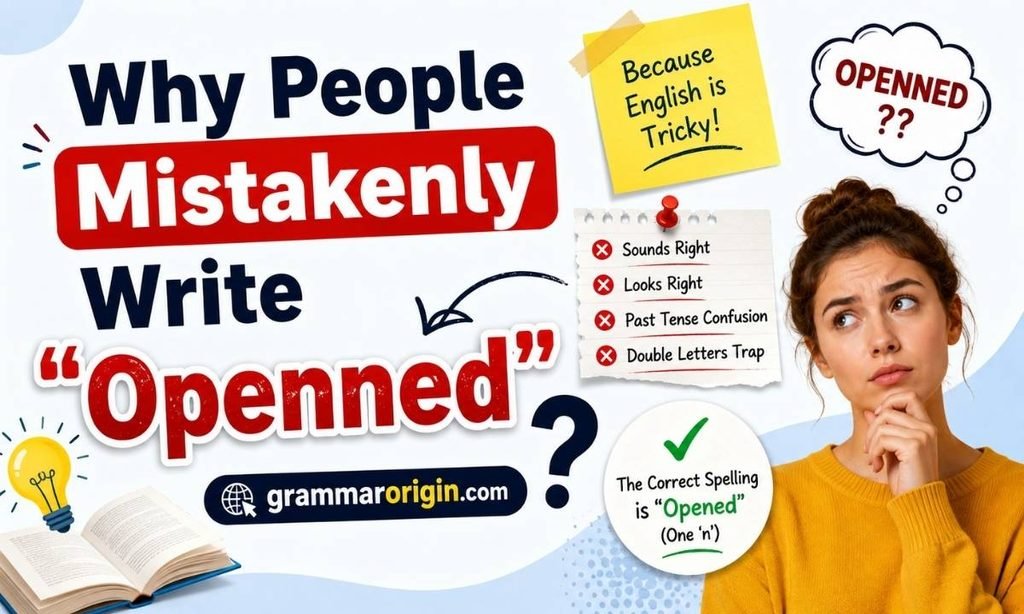
This mix-up comes from a real English spelling pattern — just one that doesn’t apply here. Several short verbs double their final consonant before adding “-ed,” like stop → stopped or plan → planned.
Writers see that pattern, assume it’s universal, and apply it to open without realizing the rule has a specific condition attached. Once you know that condition, the confusion clears up fast.
Simple Rule to Remember
The doubling rule only kicks in when a verb’s final syllable is stressed and ends in a single vowel plus a single consonant. Open doesn’t meet that condition, so it never doubles.
Say the word out loud: OH-pen. The stress lands on the first syllable, not the last, which is exactly why “opened” keeps a single N.
Comparison Table: Openned vs Opened
| Word | Correct? | Why |
| Opened | Yes | Stress falls on the first syllable, so no doubling occurs |
| Openned | No | Misapplies the doubling rule meant for last-syllable stress |
| Stopped | Yes | Stress falls on the only syllable, so doubling applies |
| Planned | Yes | Same stress pattern as “stopped” |
Examples in Sentences
Seeing the word across different settings makes the spelling stick faster than memorizing a rule alone.
Daily conversation
- I opened the fridge to grab a snack.
- She opened her umbrella before stepping outside.
Professional writing
- The team opened the quarterly report with revenue highlights.
- He opened negotiations with a firm but fair offer.
Academic writing
- The lecture opened with a question about climate policy.
- The study opened new avenues for future research.
Digital communication
- I opened your message right after lunch.
- They opened the shared document to leave comments.
Common Mistakes to Avoid
- Typing “openned” out of habit from words like planned or stopped
- Trusting autocorrect blindly instead of proofreading manually
- Assuming every short verb doubles its final letter
- Copying spelling errors seen in casual social media posts
Catching these early keeps your writing looking polished instead of rushed.
Also Read This Reinforce or Reenforce
American vs British English Differences
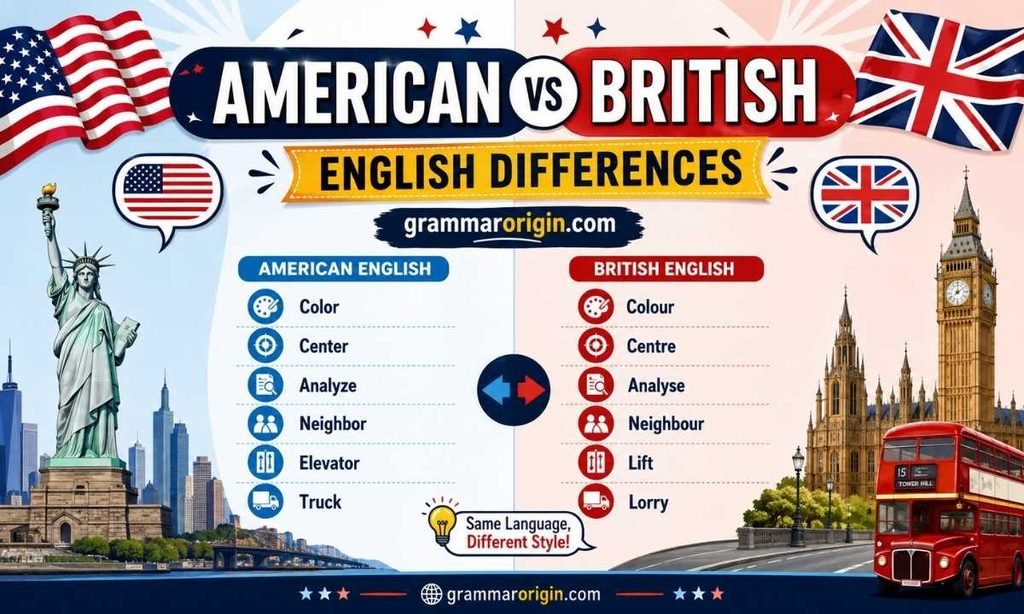
There’s no split here — American and British English both use “opened” without exception. Unlike color/colour or traveled/travelled, this word never changes shape across regions.
Whether you’re writing for a US audience, a UK audience, or anyone in between, “opened” is the only version you’ll ever need.
Related Forms of “Open”
Every form of this verb keeps a single N, which reinforces why the doubled version never fits.
- Base form: open
- Past tense: opened
- Present participle: opening
- Noun use: an open door, a grand opening
- Adjective use: an open mind, an open road
Synonyms for “Opened”
Swapping in a synonym occasionally keeps longer writing from feeling repetitive.
- Unlocked
- Launched
- Started
- Initiated
- Unveiled
- Revealed
For example, “she opened the ceremony” could just as easily read “she launched the ceremony” without losing meaning.
Mini Spelling Test (Try Yourself)
Which sentence is correct?
- He openned the letter carefully.
- He opened the letter carefully.
The second sentence is correct. If you picked it without hesitating, the stress rule has already clicked for you.
Why Correct Spelling Matters
A single misplaced letter can shift how a reader judges your writing, especially in professional or academic settings. Spelling errors like “openned” tend to read as careless rather than intentional.
Clean spelling supports credibility, keeps search engines happy, and helps your message land the way you intended it to.
Where Does “Open” Come From? (Quick Etymology)
“Open” traces back to the Old English word “openian,” which carried the same basic sense of making something accessible. That root has stayed remarkably stable across centuries of English.
Knowing this history doesn’t change the spelling rule, but it does explain why the word has such a simple, consistent past-tense form today.
why opened not openned
Opened wins because the stress-based doubling rule that governs words like stopped simply doesn’t apply to open. The stress sits on the first syllable, so English spelling rules skip the extra consonant entirely.
Openned would only make sense if open were pronounced with stress on its final syllable, which it isn’t.
is opened a word
Yes, opened is a fully standard English word, listed in every major dictionary — including Merriam-Webster and the Oxford English Dictionary — as the past tense and past participle of open.
Openned, by contrast, doesn’t appear as a legitimate entry anywhere — it’s purely a spelling slip.
opened in a sentence
A natural example: “The bakery opened its doors at six in the morning, and the smell of fresh bread drifted down the street.”
Notice how the word slots in smoothly wherever you’re describing something that used to be closed and now isn’t.
opened synonym
The closest synonym for opened, depending on context, is usually “unlocked” or “launched.” Both capture the sense of something becoming accessible or getting underway.
Picking the right synonym mostly comes down to whether you’re describing a physical object or the start of an event.
opening or openning
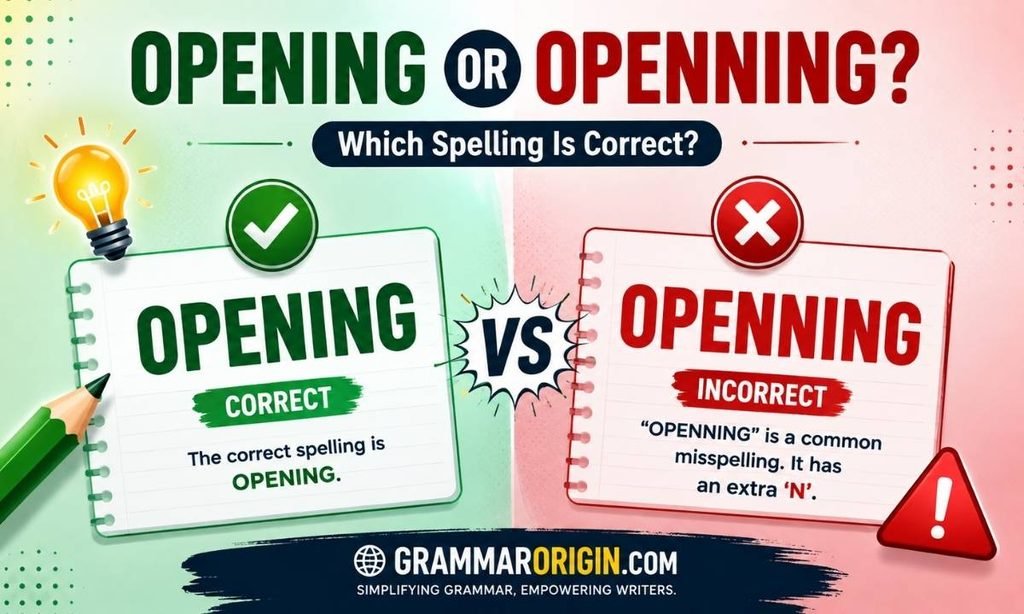
Opening is correct, following the exact same logic as opened. Since the stress still falls on the first syllable, the present participle never doubles its N either.
Openning shows up for the same reason openned does — writers borrowing a rule from words that don’t share open’s stress pattern.
Also Read This Reinforce or Reenforce
opened pronunciation
Opened is pronounced OH-puhnd, with two syllables and the stress firmly on the first one. In phonetic notation, that’s roughly /ˈoʊpənd/.
Hearing that first-syllable stress out loud is actually one of the fastest ways to remember why the spelling never doubles the N.
stopped or stoped
Stopped is correct, and this word actually does follow the doubling rule that open doesn’t. Stop has one syllable, that syllable carries all the stress, and it ends in a single vowel plus consonant — exactly the condition that triggers doubling.
That’s what makes stop → stopped a useful contrast: it shows the rule working exactly as intended, right next to open → opened, where it doesn’t apply.
Frequently Asked Questions
Is openned ever an acceptable spelling?
No. It doesn’t appear in any standard dictionary and is considered a spelling error in every context, formal or casual.
Why doesn’t open double its consonant like stop does?
Because the stress in “open” falls on the first syllable, while “stop” carries stress on its only syllable, which is the actual condition for doubling.
Is opened used the same way in American and British English?
Yes. Both varieties use the identical spelling and meaning, with zero regional variation.
How do I remember the correct spelling long-term?
Say the word aloud — OH-pen — and notice the stress sits up front, which is your built-in reminder that no extra letter belongs at the end.
Does spellcheck always catch openned?
Most modern tools flag it immediately, though quick typing in informal apps or captions can sometimes let it slip through unnoticed.
Can opened function as an adjective?
Yes. You’ll see it in phrases like “an opened package” or “an opened letter,” describing something already in an unsealed state.
Is there a similar rule for other verbs like open?
Yes. Words like happen, listen, and visit follow the same stress pattern and also skip consonant doubling in their past-tense forms.
So is it openned or opened, once and for all?
It’s opened, without exception. Every dictionary, style guide, and grammar rule confirms this, so there’s no real ambiguity left.
Final Thoughts
Choosing between openned or opened comes down to one simple rule: since the stress in “open” sits on the first syllable, the past tense never doubles its final consonant. Opened is correct everywhere, in every dialect, every single time.
Keep the “OH-pen” pronunciation trick in mind, and this spelling stops being a guessing game for good.

Muhammad Waqas is an English language teacher and grammar expert with over 8 years of experience helping students and professionals improve their writing skills. He specializes in English grammar, vocabulary, communication, and practical language learning. Through GrammarOrigin, Waqas shares clear, easy-to-understand content that helps readers write and speak English with confidence.