
You’re typing a message, you pause, and suddenly you’re not sure if it should be “what kind of” or “what kinds of.” It happens to almost everyone at some point, even people who’ve spoken English their whole lives.
The good news is that the rule behind what kind of vs what kinds of is smaller than it feels. Once you spot the singular-plural pattern, you’ll stop second-guessing yourself and start picking the right form on instinct.
Quick Answer
Use the singular form when you’re asking about one category, and switch to the plural form when you’re asking about several categories at once.
- What kind of coffee do you drink? (one general answer, like “espresso”)
- What kinds of coffee do you drink? (a list, like “espresso, latte, cold brew”)
That’s the entire rule in a nutshell. Everything else on this page just helps it stick.
Meaning of “What Kind of”
This phrase asks about one type, class, or category of something, even if that category could technically include a few examples. The word “kind” stays singular because the question is aimed at a single classification.
It pairs with singular nouns and with uncountable nouns like advice, music, or weather. You’ll hear it constantly in everyday speech because most casual questions only need one general answer.
- What kind of car does your brother own?
- What kind of weather do you enjoy most?
- What kind of support did the team offer?
When to Use It
Reach for the singular form when you expect a narrow answer, not a list. It also fits automatically with uncountable nouns, since those can’t take a plural form anyway.
Use it when:
- The noun is singular or uncountable
- You want one main answer, not several
- You’re describing a general category rather than a group of examples
Meaning of “What Kinds of”
This plural version asks about more than one category or type. The word “kinds” signals that you expect a range of answers instead of a single label.
This version shows up when the noun after it is plural, and it invites the listener to think broadly rather than pick just one thing.
- What kinds of documentaries do you enjoy watching?
- What kinds of issues came up during the meeting?
- What kinds of plants grow well indoors?
When to Use It
Choose the plural form whenever your question is really asking for a list, even an informal one. It works best when you’re exploring variety rather than narrowing things down.
Use it when:
- The noun is plural
- You expect multiple answers or examples
- You’re comparing different varieties of the same thing
Key Difference Explained Simply
The whole distinction comes down to how many categories you expect in the reply. “Kind” points to one; “kinds” points to more than one.
A simple test: if your question could be swapped for “which type,” you need the singular form. If it could be swapped for “which types,” go plural.
Also Read This Openned or Opened?
Countable vs Uncountable Nouns (Where the Confusion Starts)
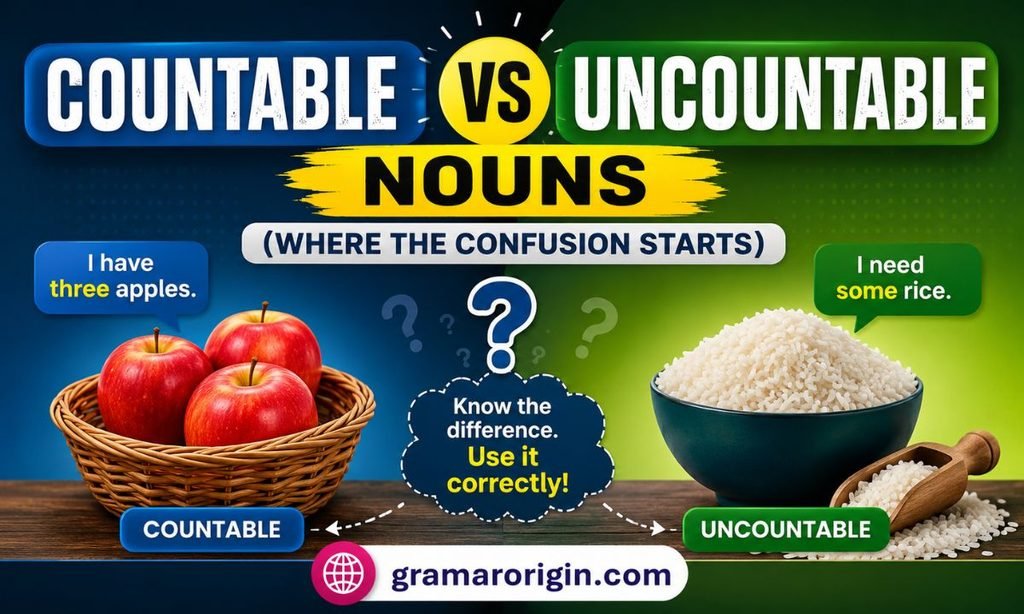
Most mix-ups happen because people forget that uncountable nouns almost always pair with the singular form, never the plural one. Nouns like music, advice, or furniture don’t have a natural plural form, so “kind” is the only fit.
Countable nouns are more flexible. A singular countable noun like “book” pairs with “kind,” while its plural form “books” calls for “kinds.”
| Noun Type | Correct Phrase | Example |
| Uncountable | What kind of | What kind of advice do you need? |
| Countable singular | What kind of | What kind of phone did you buy? |
| Countable plural | What kinds of | What kinds of phones do people prefer now? |
Native speakers rarely pluralize “kinds” with an uncountable noun like advice, because it clashes with how that noun behaves. Your ear will start catching this automatically with a bit of practice.
Collective Nouns: Team, Family, Group
Words like team, family, class, and group represent multiple people but grammatically behave as one unit, so they still take the singular form. The noun’s meaning might feel plural, but its grammar stays singular.
- What kind of team are you building for the project?
- What kind of family traditions did you grow up with?
If you shift focus to the individuals inside that group rather than the group itself, plural thinking can creep back in naturally, but the grammar of the collective noun itself doesn’t change.
Comparison Table: What Kind of vs What Kinds of
| Feature | What Kind of | What Kinds of |
| Number | Singular | Plural |
| Noun form | Singular or uncountable | Plural |
| Expected answer | One category | Multiple categories |
| Example | What kind of tea do you like? | What kinds of tea do you like? |
| Typical use | General preference | Exploring variety |
Real-Life Example Scenarios
At a bakery: “What kind of bread is fresh today?” asks about one option, while “What kinds of bread do you bake here?” is really asking for the full menu.
During a job interview: “What kind of role are you looking for?” wants one clear answer, while “What kinds of projects have you led?” expects a short list of examples.
In a classroom: “What kind of story is this?” points to a single genre, while “What kinds of stories do you like reading?” opens the door to several genres at once.
Common Mistakes and How to Avoid Them
The most frequent error is pairing the singular form with a clearly plural noun, or the reverse. Matching the noun’s number to the phrase fixes almost every mistake instantly.
- ❌ What kind of shoes do you like?
- ✔ What kinds of shoes do you like?
- ❌ What kinds of music is playing?
- ✔ What kind of music is playing?
Sometimes both versions are technically correct, and the choice just changes the meaning slightly, not the grammar. Asking about movies in the singular form leans toward one general preference, while the plural version invites a wider list.
“These Kind of” vs “These Kinds of” (Demonstrative Agreement Mistake)
This is a smaller trap that trips up even confident writers. “These kind of” is grammatically off because the plural demonstrative “these” can’t attach to the singular noun “kind.”
- ❌ These kind of books confuse me.
- ✔ These kinds of books confuse me.
- ✔ This kind of book confuses me.
Match “this” with “kind” and “these” with “kinds,” and the sentence will always sound right.
Helpful Memory Trick
Here’s a shortcut that sticks: kind means one, kinds means many. If your sentence could take the word “which type,” stay singular; if it could take “which types,” go plural.
Repeating this pairing a few times in your head is usually enough to make the choice automatic.
American vs British English Differences
There’s no grammar difference between American and British English here; both dialects follow the exact same singular-plural rule covered throughout this guide. What changes is tone and phrasing style, not the underlying grammar.
American speakers tend to ask more directly, such as “What kind of job do you do?” British speakers sometimes soften the same question, like “What kind of job is it that you do?” Either way, the core rule travels unchanged across both varieties of English.
Related Phrases and Synonyms
Several other expressions follow the exact same singular-versus-plural logic, which makes your vocabulary sound more varied once you know them.
- Which type of / which types of
- What sort of / what sorts of
- What variety of / what varieties of
- What category of
“What sort of food do you like?” means essentially the same thing as “What kind of food do you like?” Swapping between these keeps your questions from sounding repetitive.
Also Read This Openned or Opened?
Which Type of Noun
“Which type of” tends to imply that the options are already known or limited, unlike its more open-ended cousin. It’s a subtle shift, but it changes how a listener responds.
- What kind of coffee do you like? (open question, any answer works)
- Which type of coffee do you want from this menu? (choices are already listed)
The noun that follows still needs to match in number: singular nouns pair with “which type of,” and plural nouns pair with “which types of,” following the same logic used throughout this guide.
Why This Distinction Matters

Getting this right isn’t just about sounding polished; it actually shapes the kind of answer someone gives you. A mismatched question can leave the listener guessing whether you want one detail or several.
Clear phrasing also builds trust in professional settings, where a vague or grammatically off question can make written communication feel careless. Even native speakers slip up occasionally, but mastering this one detail noticeably sharpens how confident your English sounds.
Practice Sentences
Try filling in the blank with the correct phrase before checking the answers below.
- ___ animals live in this region?
- ___ car does she drive?
- ___ hobbies do you enjoy on weekends?
- ___ advice did your mentor give you?
- ___ music makes you want to dance?
Answers: 1. What kinds of 2. What kind of 3. What kinds of 4. What kind of 5. What kind of
What Kind of Examples
Everyday conversations lean on “what kind of” constantly because most questions only need a single, general answer. Here are a few natural examples across different situations.
- What kind of laptop should I buy for design work?
- What kind of exercise do you do most mornings?
- What kind of person thrives in a fast-paced office?
- What kind of soup is on the menu today?
Notice that each question narrows toward one type, even when the topic itself could branch into many directions.
What Kinds of Things
“What kinds of things” is a broad, everyday version of this pattern, often used when the subject isn’t specific yet. It’s common in casual conversation, brainstorming, and open-ended interviews.
- What kinds of things do you collect?
- What kinds of things worry you about the project?
- What kinds of things make a good vacation for you?
Because “things” is plural and vague, this phrasing naturally invites a longer, more varied answer than a single-word reply.
What Kind of Words
This phrase usually shows up when someone’s asking about vocabulary, tone, or word choice rather than physical objects. It stays singular because the question targets one category of language.
- What kind of words should I avoid in a formal email?
- What kind of words make a headline more persuasive?
- What kind of words do children pick up first?
If the question shifted to comparing several categories of vocabulary at once, “what kinds of words” would take over instead.
Frequently Asked Questions
Is “what kind of” always singular?
Yes, “what kind of” always pairs with a singular or uncountable noun, even in cases where the eventual answer includes more than one example.
Can “what kind of” ever be used with a plural noun?
It happens in casual speech, but standard grammar prefers “what kinds of” whenever the following noun is plural.
Is “what sort of” different from “what kinds of”?
Not really; “sort” and “kind” mean the same thing, so “what sort of” behaves just like “what kind of” in terms of grammar.
Which is more formal, “kind” or “type”?
“Type” tends to sound slightly more formal in writing, but both “kind” and “type” are perfectly acceptable in professional English.
Do native English speakers ever mix these up?
Yes, it happens fairly often in relaxed conversation, though context usually makes the intended meaning clear regardless.
Is there a British English version of this rule?
No, British and American English share the identical singular-plural rule for “what kind of vs what kinds of”; only the surrounding phrasing style differs slightly.
What’s the fastest way to remember which one to use?
Check the noun right after the phrase: singular or uncountable nouns need “what kind of,” while plural nouns need “what kinds of.”
Final thoughts
The gap between “what kind of” and “what kinds of” really just comes down to number: one category versus several. Match the phrase to the noun that follows, and the grammar takes care of itself.
With the memory trick, the comparison table, and a bit of practice from this guide, choosing the right form should start feeling automatic rather than like a guessing game.

Muhammad Waqas is an English language teacher and grammar expert with over 8 years of experience helping students and professionals improve their writing skills. He specializes in English grammar, vocabulary, communication, and practical language learning. Through GrammarOrigin, Waqas shares clear, easy-to-understand content that helps readers write and speak English with confidence.