
Trying to decide between “I’ll be forever grateful” and “I’ll forever be grateful” can feel like a small grammar trap. Both phrases show up constantly in thank-you notes, speeches, and casual texts, so it’s natural to wonder if one is technically wrong.
Here’s the short version: in the forever grateful vs forever be grateful debate, neither phrase breaks any grammar rule. The real difference comes down to rhythm, emphasis, and the impression you want to leave — and this guide walks through exactly how to pick the right one.
Quick Answer
Both “I’ll be forever grateful” and “I’ll forever be grateful” are correct English sentences. They differ only in where the adverb “forever” sits, not in whether the sentence is valid.
“I’ll be forever grateful” tends to read a bit smoother in everyday speech, emails, and notes. “I’ll forever be grateful” nudges a little extra weight onto the word “forever,” which can suit speeches or emotional writing. Pick based on tone, not correctness — you won’t be wrong either way.
Comparison Table
| Aspect | I’ll Be Forever Grateful | I’ll Forever Be Grateful |
| Grammar status | Correct | Correct |
| Adverb position | After the verb “be” | Before the verb phrase |
| Everyday use | More frequent | Less frequent, still common |
| Best fit | Emails, notes, casual talk | Speeches, toasts, reflective writing |
| Emphasis | On the whole idea of gratitude | On the word “forever” itself |
| Formal writing | Works well | Works well |
| Sounds interchangeable? | Yes, in almost every context | Yes, in almost every context |
The table makes one thing obvious: nothing here is a right-versus-wrong situation. It’s a stylistic fork in the road, and either path gets you to the same meaning.
Are Both Grammatically Correct?
Yes — both sentences follow standard English syntax without exception. The confusion usually starts because people assume an adverb has one fixed “correct” spot in a sentence, which isn’t how English works.
“Forever” belongs to a small group of adverbs that can shift position without breaking a sentence or changing its core meaning. That flexibility is exactly why grammar checkers, editors, and native speakers accept both versions as proper English usage without flagging either one.
Why Both Sentences Work
English lets certain time-related adverbs move around the verb phrase freely. Words like “always,” “never,” and “forever” all behave this way, which is why sentences like “I always try” and “I try always” both sound acceptable, even if one feels more natural.
Apply that same logic here. “I’ll be forever grateful” places “forever” right after the verb “be,” while “I’ll forever be grateful” moves it in front of the whole verb phrase. Neither placement confuses the reader or changes what you’re actually saying.
The Role of Forever as an Adverb
“Forever” functions as an adverb of time, and its job is to describe how long the state of being grateful will last. In grammar terms, it’s modifying the verb phrase “be grateful,” telling the reader this feeling has no expiration date.
Because adverbs of time and frequency are naturally mobile in English sentences, “forever” doesn’t need to sit in one fixed spot to do its job correctly. That mobility is a documented feature of English syntax, not a loophole or an exception.
What’s the Difference Between the Two Phrases?
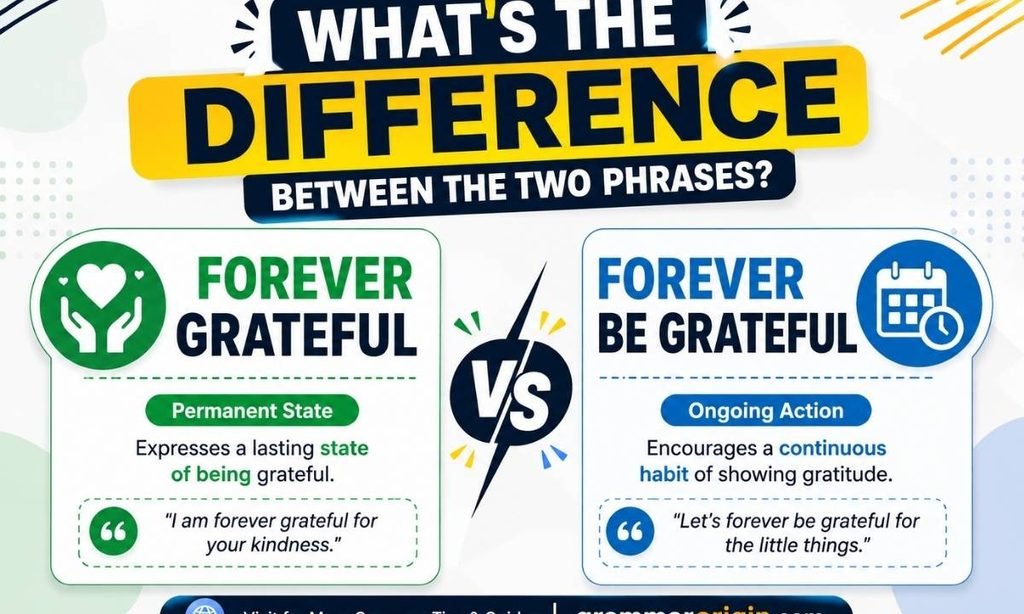
The gap between these two phrases is stylistic, not grammatical — it lives in word order, sentence rhythm, and how much attention lands on “forever.” Meaning-wise, a listener will understand both the same way almost every time.
Still, subtle shifts matter in writing that’s meant to land emotionally, like a speech or a heartfelt letter. Below are the three areas where the phrases actually pull apart.
Word Order
“I’ll be forever grateful” follows the more common pattern: subject, verb “be,” adverb, adjective. This is the structure most native speakers default to without thinking about it.
“I’ll forever be grateful” swaps that order, placing the adverb before the verb phrase instead of after it. It’s a valid pattern too, just a less frequent one in casual speech.
Emphasis
When “forever” trails the verb, as in “I’ll be forever grateful,” the sentence reads as one smooth, balanced thought. Nothing gets singled out — the whole phrase carries equal weight.
Move “forever” to the front of the verb phrase, and it picks up a touch more spotlight. “I’ll forever be grateful” quietly draws the ear toward how long the gratitude lasts, rather than the gratitude itself.
Tone
Both versions sound warm and sincere, so neither one risks coming across as cold or overly formal. The tone difference here is closer to a whisper than a shout.
“I’ll be forever grateful” leans conversational and easy, fitting almost any setting. “I’ll forever be grateful” carries slightly more weight, which suits messages meant to feel a bit more deliberate or emotional.
Which Sounds More Natural?
For most everyday writing, “I’ll be forever grateful” is the more natural-sounding choice among native English speakers. It shows up more often in emails, cards, and spoken conversation because the rhythm matches how people typically talk.
That doesn’t make “I’ll forever be grateful” awkward or incorrect — it’s just used less frequently outside of speeches, toasts, and reflective writing. If you’re unsure which to reach for, default to the first version; it rarely feels out of place.
When Should You Use “I’ll Be Forever Grateful”?
Use “I’ll be forever grateful” when you want your message to sound effortless and widely appropriate. It works in nearly every setting without drawing attention to itself.
This version fits especially well in:
- Thank-you emails and cards
- Everyday conversation
- Business and professional messages
- Personal letters
- General appreciation notes
A line like “I’ll be forever grateful for the guidance you gave me” reads naturally whether you’re writing to a colleague, a mentor, or a close friend.
When Should You Use “I’ll Forever Be Grateful”?
Reach for “I’ll forever be grateful” when you want a slightly stronger, more deliberate feel to your gratitude. The extra emphasis on “forever” suits moments where emotion is meant to stand out.
This version tends to fit well in:
- Wedding toasts and heartfelt speeches
- Personal reflections or journal entries
- Creative writing and storytelling
- Social captions with an emotional tone
- Messages meant to feel a bit more poetic
Something like “I’ll forever be grateful that you believed in me” carries a touch more weight than the everyday version, without sounding forced.
Also Read This Past Tense of Swing
Examples in Different Contexts
Seeing both phrases inside real sentences makes the choice easier than reading rules alone. Below are examples grouped by the kind of writing you’re likely doing.
Formal Examples
- I’ll be forever grateful for your mentorship throughout this project.
- Our team will be forever grateful for the trust you placed in us.
Informal Examples
- I’ll be forever grateful for a friend like you.
- Honestly, I’ll forever be grateful you stuck around when things got messy.
Business Email Examples
- I’ll be forever grateful for the chance to join your team this year.
- We’ll be forever grateful for your continued partnership and support.
Graduation Speech Examples
- I’ll forever be grateful to the teachers who never gave up on me.
- I’ll be forever grateful to my family for pushing me toward this moment.
Common Mistakes
Most errors around this phrase happen when “forever” ends up in a spot that breaks the sentence rather than just shifting emphasis. A quick read-aloud test usually catches these.
Incorrect
- ❌ I’ll forever grateful. → ✅ I’ll forever be grateful.
- ❌ I forever will be grateful. → ✅ I’ll be forever grateful.
- ❌ I’ll grateful be forever. → ✅ I’ll be forever grateful.
- ❌ I’ll be grateful forever always. → ✅ I’ll always be grateful, or I’ll be forever grateful.
The pattern here is simple: “forever” needs to sit next to a verb it can logically modify, not get stranded between unrelated words.
Similar Expressions
If you want variety in your writing instead of repeating the same phrase, several alternatives carry a similar meaning.
- I’ll always be grateful.
- I’m eternally grateful.
- I’m deeply thankful.
- You’ll always have my gratitude.
- I can’t thank you enough.
- I’m forever in your debt.
- I’ll never forget your kindness.
Each option shifts the tone slightly, so swapping between them can keep repetitive thank-you messages from sounding stale and gives your appreciation a fresh sentence flow.
Grammar Tip: Does Adverb Placement Change Meaning?
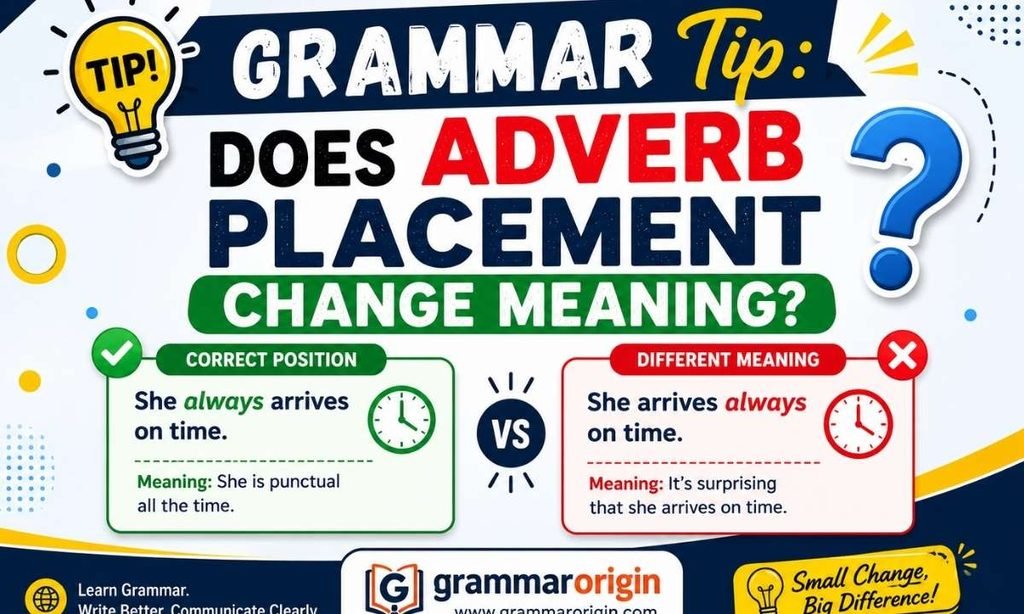
Not usually — adverb placement changes rhythm and emphasis far more often than it changes actual meaning. This is a well-documented pattern with English adverbs of time and frequency, not something unique to “forever.”
Compare “She’ll always remember this” with “She’ll remember this always.” Both are grammatical, both mean the same thing, and the choice between them comes down to how the sentence sounds to your ear. “Forever grateful” versus “forever be grateful” follows the exact same logic.
Which Phrase Should You Choose?
If you’re writing something quick — an email, a card, a casual thank-you — go with “I’ll be forever grateful.” It’s the safer, more universally natural option.
If you’re writing something meant to carry emotional weight, like a speech or a heartfelt letter, “I’ll forever be grateful” adds a touch more intensity without sounding out of place. Either way, you’re using correct English.
“I will be forever grateful to you” — Meaning
“I will be forever grateful to you” means your appreciation for someone’s specific action or kindness will never fade, no matter how much time passes. It’s a direct, person-focused way of saying thanks that won’t wear off.
Adding “to you” makes the sentence about the person, not just the feeling itself — it’s a small but meaningful shift that personalizes the gratitude instead of leaving it abstract.
“I’ll forever be grateful to you” or “for you”?
“To you” and “for you” both work, but they emphasize slightly different things. “To you” directs the gratitude at the person themselves, almost like addressing them directly.
“For you” leans toward the reason behind the gratitude — what they did or gave. So “I’ll forever be grateful to you” reads as a message to a person, while “I’ll forever be grateful for you” reads more like appreciation for their presence or role in your life. Both are grammatically sound; the choice depends on what you’re actually thanking someone for.
“If you are grateful, I will give you more” (Qur’an 14:7)

Qur’an 14:7 states, “If you are grateful, I will surely increase you [in favor]; but if you deny, indeed, My punishment is severe.” It’s one of the most cited verses on gratitude in Islamic teaching, linking thankfulness directly to an increase in blessings.
Scholars generally read this “increase” broadly — not only material gain, but also peace of mind, guidance, and spiritual growth. The verse reinforces gratitude as an active practice with real consequences, not just a polite phrase, which is part of why expressions like “forever grateful” carry such deep cultural resonance beyond everyday English usage.
Also Read This Past Tense of Swing
Cultural Influence
Gratitude phrases like “forever grateful” don’t exist in a vacuum — many cultures and faith traditions treat lasting thankfulness as a core value, not just good manners. In Islamic tradition, as Qur’an 14:7 shows, gratitude is tied to blessing and increase.
Other cultures express similar ideas through different lenses: gratitude journaling in Western self-help writing, ancestral thankfulness in many Asian traditions, and communal gratitude rituals in indigenous cultures worldwide. These backgrounds shape why “forever grateful” resonates so widely — it taps into something closer to a universal human value than a simple English phrase.
“I’ll Be Grateful Forever” — Is This a Third Valid Option?
Yes, “I’ll be grateful forever” is also grammatically correct, and native speakers do use it. Placing “forever” at the very end of the sentence is a third accepted word order alongside the two more common versions.
This structure puts the heaviest emphasis on “forever” of all three options, since it’s the last word the reader or listener hears. It works well in spoken English and casual writing, though it’s used less often in formal or written contexts than the other two phrasings.
Frequently Asked Questions
Is “I’ll be forever grateful” grammatically correct?
Yes, it’s a fully correct sentence and one of the most common ways to express lasting thankfulness in English.
Is “I’ll forever be grateful” also correct?
Yes. It follows standard English adverb placement rules and sounds natural to native speakers, especially in speeches and emotional writing.
Which phrase is more common in everyday English?
“I’ll be forever grateful” is used more often in casual conversation, emails, and professional writing than its counterpart.
Can I use “I’ll be forever grateful” and “I’ll forever be grateful” interchangeably?
Yes, in almost every context. The meaning stays nearly identical; only the emphasis and rhythm shift slightly.
What does “I’ll forever be grateful to you” mean exactly?
It means your gratitude toward that specific person will never fade, with the emphasis falling on how long that feeling will last.
Is “I’ll be grateful forever” also correct?
Yes, this is a third valid word order. It places the strongest emphasis on “forever” by putting it at the end of the sentence.
Does the Qur’an mention gratitude and increase?
Yes, Qur’an 14:7 directly links gratitude to increase, stating that being grateful leads to being given more, which is one reason lasting gratitude carries such deep meaning across cultures.
The bottom Line
At the end of the day, the forever grateful vs forever be grateful debate isn’t really about right or wrong — both phrases are correct, and both express the same lasting appreciation. Your choice comes down to rhythm, emphasis, and the setting you’re writing for.
Use “I’ll be forever grateful” for everyday warmth and “I’ll forever be grateful” when you want a touch more emotional weight. Either way, your gratitude will come through clearly.

Muhammad Waqas is an English language teacher and grammar expert with over 8 years of experience helping students and professionals improve their writing skills. He specializes in English grammar, vocabulary, communication, and practical language learning. Through GrammarOrigin, Waqas shares clear, easy-to-understand content that helps readers write and speak English with confidence.