
Is it “a MA” or “an MA”? You’ve probably typed it both ways and paused before hitting send. This tiny grammar detail trips up even experienced writers, and it shows up everywhere — resumes, emails, university applications.
Here’s the good news: the rule is simple once you understand it. In this guide, you’ll get the correct answer immediately, plus the exact grammar logic behind it, so you never second-guess yourself again.
Quick Answer: A MA or An MA?
The correct form is an MA.
We use “an” before MA because the abbreviation is pronounced “em-ay,” and that opening sound is a vowel sound. English articles follow sound, not spelling. So even though “M” looks like a consonant on paper, it doesn’t behave like one when spoken.
- ✅ She earned an MA in Psychology.
- ❌ She earned a MA in Psychology.
That’s the short version. Now let’s look at why this rule exists.
How English Articles Work: A vs An (Sound, Not Spelling)
Most people learn a simple shortcut in school: use “a” before consonants and “an” before vowels. That shortcut is close, but incomplete.
The real rule is this:
- Use a before a consonant sound
- Use an before a vowel sound
Spelling doesn’t decide the article. Pronunciation does. That’s why English has several exceptions where a word’s first letter and first sound don’t match.
A few classic examples make this clear:
- an hour — the “h” is silent, so the word starts with a vowel sound
- a university — starts with a “yoo” sound, which is a consonant sound
- an MBA — pronounced “em-bee-ay,” starting with a vowel sound
Once you understand this pattern, the confusion around “a MA or an MA” disappears completely.
Why “An MA” Is Correct (Pronunciation Breakdown)
Say the letters M and A out loud, one at a time. You’ll hear “em-ay.”
The letter M looks like a consonant in writing. But when spoken on its own, it produces the sound “em” — and “em” begins with a vowel sound.
That’s the entire reason MA takes “an” instead of “a.” The abbreviation isn’t read as a word; it’s read letter by letter, and the very first letter happens to start with a vowel sound.
Rule in one line: MA begins with the vowel sound “em,” so the correct form is always an MA.
What Does MA Mean? (Master of Arts Explained)
MA stands for Master of Arts, a postgraduate academic degree awarded after a bachelor’s degree, usually in humanities and social science subjects.
Common MA fields include:
- English Literature
- History
- Sociology
- Psychology
- Political Science
- Communication Studies
Most MA programs take one to two years and may involve coursework, a research project, or a thesis. When you shorten “Master of Arts” to “MA,” the pronunciation changes — and that change is exactly why the article changes too.
Correct vs Incorrect Examples
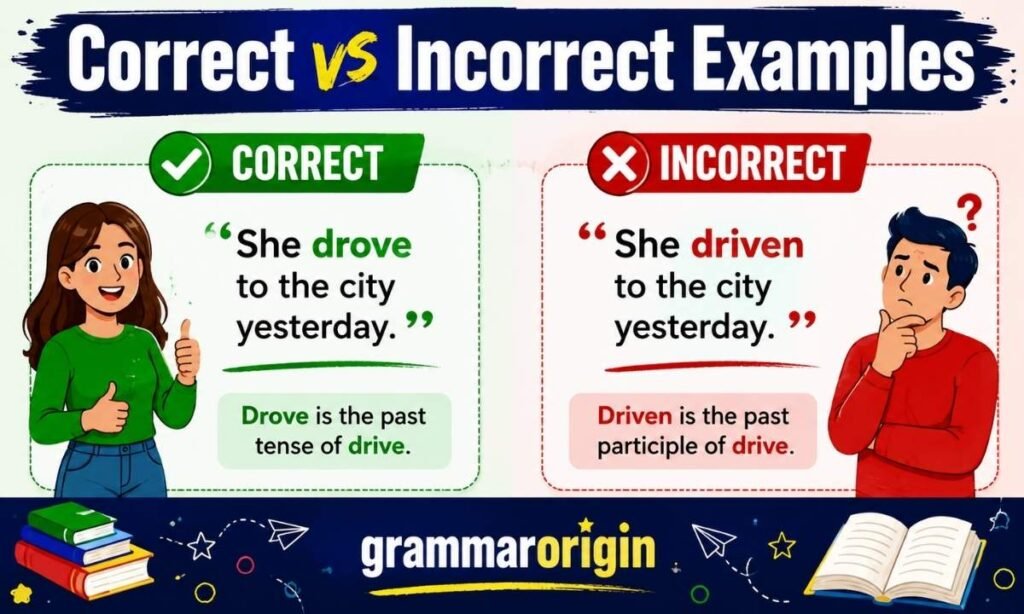
Seeing the rule in real sentences makes it easier to remember.
Correct (an MA):
- I completed an MA in English Literature.
- She is pursuing an MA in Economics.
- He was offered an MA scholarship last year.
- Her MA research focused on climate policy.
Incorrect (a MA):
- ❌ I completed a MA in English Literature.
- ❌ She is pursuing a MA in Economics.
- ❌ He was offered a MA scholarship last year.
Notice the pattern: every time “MA” appears as the abbreviation, “an” belongs right in front of it — no exceptions.
A Master of Arts or An Master of Arts? (Full Name Rule)
Here’s where many writers get confused. The rule changes depending on whether you use the abbreviation or the full degree name.
When you write out “Master of Arts,” the first word is “Master,” and that starts with a hard consonant sound (“muh”). So the correct article is a, not “an.”
- ✅ She holds a Master of Arts in English.
- ❌ She holds an Master of Arts in English.
Swap in the abbreviation, and the article flips:
- ✅ She holds an MA in English.
Same degree. Different article. The only thing that changed is the starting sound.
READ MORE RELATED POST Violet vs Indigo vs Purple
MA vs MBA vs BA vs PhD vs BSc — Full Comparison Table
Most guides only compare MA and MBA. Here’s a wider reference table so you can apply the same logic to other common degree abbreviations.
| Abbreviation | Pronunciation | Correct Article | Example |
| MA | em-ay | an MA | an MA in History |
| MBA | em-bee-ay | an MBA | an MBA graduate |
| BA | bee-ay | a BA | a BA in Sociology |
| PhD | pee-aitch-dee | a PhD | a PhD candidate |
| BSc | bee-ess-see | a BSc | a BSc in Physics |
| LLM | ell-ell-em | an LLM | an LLM degree |
How to use this table: say the abbreviation’s first letter out loud, then apply the vowel-or-consonant sound rule. It works every time, for any abbreviation you come across.
Capitalization Rules for Academic Degrees
Articles aren’t the only detail people get wrong. Capitalization causes just as much confusion.
The rule:
- Capitalize the formal degree name — Master of Arts, Bachelor of Science
- Lowercase the generic reference — master’s degree, bachelor’s degree
Correct:
- She earned a Master of Arts in History.
- He holds an MA in Psychology.
- She has a master’s degree in Sociology.
Incorrect:
- She earned a master of arts in History. (should be capitalized)
- I completed my Master’s Degree. (should be lowercase, generic term)
Academic degree names follow the same logic as any proper noun: capitalize the official title, lowercase the everyday description.
Master’s vs Masters (Possessive Form)
This is one of the most common resume mistakes.
The correct spelling includes an apostrophe: master’s degree.
Why? The apostrophe shows possession — the degree effectively “belongs” to a master. You’re describing a degree of a master, which requires the possessive form.
- ✅ I completed my master’s degree in Sociology.
- ❌ I completed my masters degree in Sociology.
However, when you write the full formal title, there’s no apostrophe at all:
- ✅ Master of Arts
- ❌ Master’s of Arts
The same apostrophe rule applies to bachelor’s degree and associate’s degree.
MA vs M.A. — Which Should You Use?
Both MA and M.A. are grammatically acceptable. The choice mostly comes down to regional preference and style guide.
| Style/Region | Preferred Form |
| United Kingdom | MA |
| United States (traditional academic style) | M.A. |
| Modern resumes and websites | MA (without periods) |
Whichever version you choose, stay consistent throughout the same document. Mixing “MA” and “M.A.” in one resume or article looks careless, even though both forms are technically correct.
Does the Rule Change in British vs American English?
No — the article rule itself doesn’t change. “An MA” is correct in both British and American English because it’s based on pronunciation, and the pronunciation of “MA” doesn’t shift between the two dialects.
What does differ slightly is degree culture. In the UK, some universities (notably Oxford and Cambridge) award an MA to graduates automatically after a set number of years, without additional coursework — a tradition unrelated to grammar but worth knowing if you’re writing about UK degrees specifically. In the US, an MA always represents a separate postgraduate program.
Either way, the grammar stays fixed: an MA, everywhere English is spoken.
Common Mistakes People Make
Even confident writers slip up here. The most frequent errors include:
- Writing “a MA” instead of “an MA”
- Writing “an Master of Arts” instead of “a Master of Arts”
- Dropping the apostrophe in “master’s degree”
- Capitalizing “master’s degree” when it should be lowercase
- Mixing “MA” and “M.A.” in the same document
Why these mistakes happen: most people rely on how a word looks rather than how it sounds. Since “M” is technically a consonant letter, the eye assumes “a” is correct — but the ear knows better.
READ MORE RELATED POST Violet vs Indigo vs Purple
Quick “Say It Out Loud” Sound Test
Whenever you’re unsure which article to use, run this quick test:
- Say the word or abbreviation out loud.
- Listen to the very first sound, not the first letter.
- Vowel sound → use “an.”
- Consonant sound → use “a.”
Try it yourself:
- MA → “em” → vowel sound → an MA
- Hour → “our” → vowel sound → an hour
- University → “yoo” → consonant sound → a university
- Master of Arts → “muh” → consonant sound → a Master of Arts
This trick works for any tricky word, not just MA.
Related Grammar Rules
The same sound-based logic applies to many other abbreviations. Once you understand the rule behind “a MA or an MA,” you can apply it instantly elsewhere:
- an NGO (pronounced “en-jee-oh”)
- an FBI agent (pronounced “ef-bee-eye”)
- a UFO sighting (pronounced “yoo-eff-oh”)
- an SOS signal (pronounced “ess-oh-ess”)
Notice that the letter doesn’t decide the article — the sound always does.
Frequently Asked Questions
Is it correct to say “a MA degree”?
No. The correct form is an MA degree, because MA is pronounced “em-ay,” which starts with a vowel sound.
Why do we use “an” before MA instead of “a”?
Because English articles depend on sound, not spelling. Even though “M” is a consonant letter, it’s pronounced “em,” and “em” begins with a vowel sound.
Is it “a Master of Arts” or “an Master of Arts”?
It’s always a Master of Arts, because “Master” starts with the consonant sound “muh.”
Is it also “an MBA”?
Yes. MBA is pronounced “em-bee-ay,” which also starts with a vowel sound, so the correct form is an MBA.
Should I write MA or M.A.?
Both are correct. MA (without periods) is more common in the UK and in modern resumes, while M.A. appears more in traditional US academic writing. Just stay consistent throughout your document.
Is “masters degree” or “master’s degree” correct?
Master’s degree is correct, with an apostrophe, because the phrase is possessive. “Masters degree” without an apostrophe is a common but incorrect spelling.
Does the rule change for plural forms, like “two MAs”?
No. The plural is written as MAs (no apostrophe), and the article rule still applies based on the sound of “MA” whenever it’s used in a sentence.
Final Thoughts
The rule behind “a MA or an MA” comes down to one simple habit: trust your ears, not your eyes. MA is pronounced “em-ay,” and that opening sound is a vowel sound — which is exactly why an MA is always correct, while “a MA” is not.
Once you separate this rule from the full degree name — remembering that it’s “a Master of Arts” but “an MA” — you’ll never hesitate over this detail again, whether you’re updating a resume, writing an email, or filling out an application.

Muhammad Waqas is an English language teacher and grammar expert with over 8 years of experience helping students and professionals improve their writing skills. He specializes in English grammar, vocabulary, communication, and practical language learning. Through GrammarOrigin, Waqas shares clear, easy-to-understand content that helps readers write and speak English with confidence.