
If you’ve ever paused mid-sentence wondering whether it’s “speech” or “speach,” you’re not alone. This mix-up shows up constantly in emails, school essays, and exam papers.
Speech is the only correct spelling. Speach does not exist in any English dictionary, and this guide walks through the meaning, the history, and the easiest ways to remember it for good.
Speech
Speech is a real, dictionary-recognized word. It refers to the act of speaking, or to a formal talk given to an audience.
You’ll see it used both ways: as the general ability to talk (“the gift of speech”) and as a specific event (“she gave a speech”). Both uses are correct and common.
Speach
Speach is not a word. It doesn’t appear in Merriam-Webster, Cambridge, or Oxford, and no style guide accepts it.
Most people write it this way because “speak” has an “a” in it, so it feels logical to carry that letter into “speech.” English just doesn’t follow that pattern here.
Speech or Speach: Quick Answer
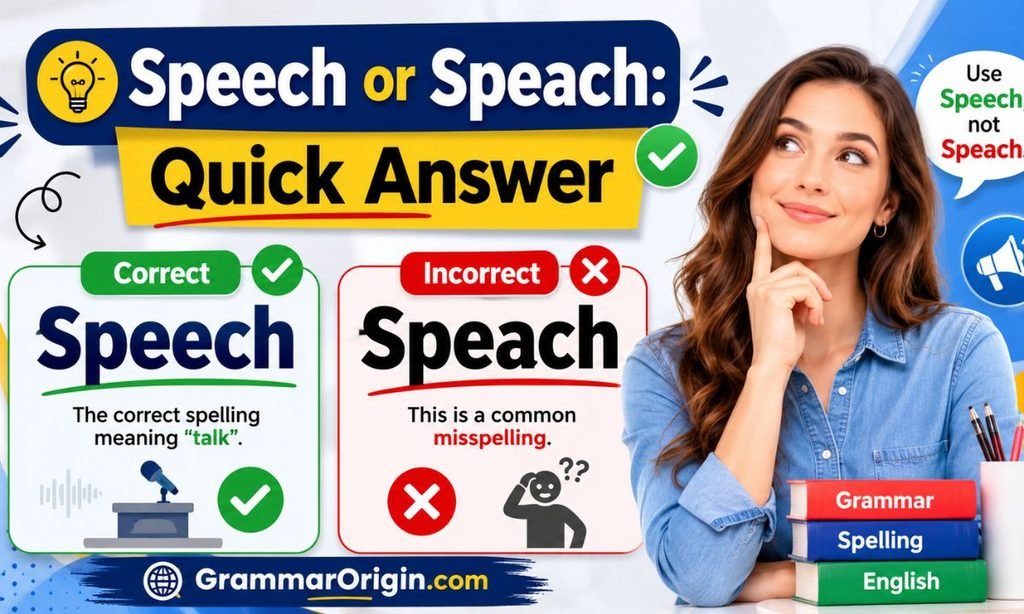
Speech is correct. Speach is a spelling mistake, plain and simple.
Main Difference
- Speech: correct, recognized in every dictionary
- Speach: incorrect, not a real word
Examples
- Correct: She gave an inspiring speech at the ceremony.
- Correct: Freedom of speech is protected by law.
- Wrong: She gave an inspiring speach at the ceremony.
Definitions with Examples
Speech (Definition)
Speech means the act of speaking, or a formal talk delivered to a group of people.
Examples
- He delivered a powerful speech at the conference.
- Her speech left the whole room in tears.
- The teacher asked each student to prepare a short speech.
Speach (Definition)
There’s no definition to give here. Speach is simply a misspelling, not a separate word with its own meaning.
Examples
- Wrong: Speach is not the correct spelling.
- Correct: Always write speech instead of speach.
Simple Meaning
Speech is the word you want, every time. Speach is just an error that slipped past a spell check.
The Origin of Speech
Speech comes from the Old English word “spæc,” which meant the act or manner of speaking.
Historical Background
Spæc traces back further to a Proto-Germanic root, “sprek,” which also shaped related words in other languages: “sprache” in German, “spraak” in Dutch, and “sprog” in Danish.
For a long stretch of its history, the English word was even spelled with an “a” in it, closer to how “speak” looks today. That letter dropped out around the 19th century, leaving the modern double-E spelling we use now.
Also Read This Atleast or At Least: Which Spelling Is Correct?
Modern Use
Today, speech shows up in classrooms, courtrooms, political debates, and everyday conversation. The spelling itself has stayed locked in place since that 19th-century shift.
Speech Pronunciation Guide
Speech is pronounced “speech,” rhyming with “beach” or “teach,” with a sharp “ee” sound in the middle.
That “ee” sound is exactly why “speach” trips people up. Nothing in the spoken word hints at an “a,” so writers borrow it from “speak” out of habit rather than sound.
Say the word slowly and picture “peach” with an “s” in front of it. That trick alone fixes the spelling for most people permanently.
Speech vs Speach: Key Difference Explained
There isn’t really a contest here. One is a real English word, and the other simply isn’t.
Important Point
Speech carries meaning, grammar, and dictionary backing across every major reference source. Speach carries none of that, in any context, formal or casual.
Comparison Table
| Feature | Speech | Speach |
| Correct spelling | Yes | No |
| Found in dictionaries | Yes | No |
| Has a meaning | Yes | No |
| Accepted in exams | Yes | No |
Example
- Correct: His speech was clear and confident.
- Wrong: His speach was clear and confident.
Speech vs A Speech: Countable or Uncountable?
Speech works as both an uncountable noun and a countable one, depending on what you mean.
Without an article, “speech” refers to the general ability to talk, as in “speech therapy” or “loss of speech.” With an article, “a speech” refers to one specific talk given to an audience, like a graduation speech or a campaign speech.
The plural form, “speeches,” only applies to this second, countable sense. You’d never say “speeches” when talking about the general ability to speak.
Which Spelling Should You Use?
Use speech in every situation, from casual texts to formal reports. There’s no context where speach is acceptable.
Always Use
Speech, without exception, in every form of writing.
In Exams
Examiners mark speach wrong even if the rest of the sentence is flawless. Spelling counts on its own.
In Emails & Writing
Professional writing depends on small details like this one. Style guides such as AP and Chicago list only the two-E spelling, and following that standard builds credibility with readers and colleagues alike.
Easy Trick to Remember
Think of speech as “peach” with an “s” at the front. Both words share that same double-E sound, and the visual link sticks fast.
Is Speech or Speach Correct in the UK?
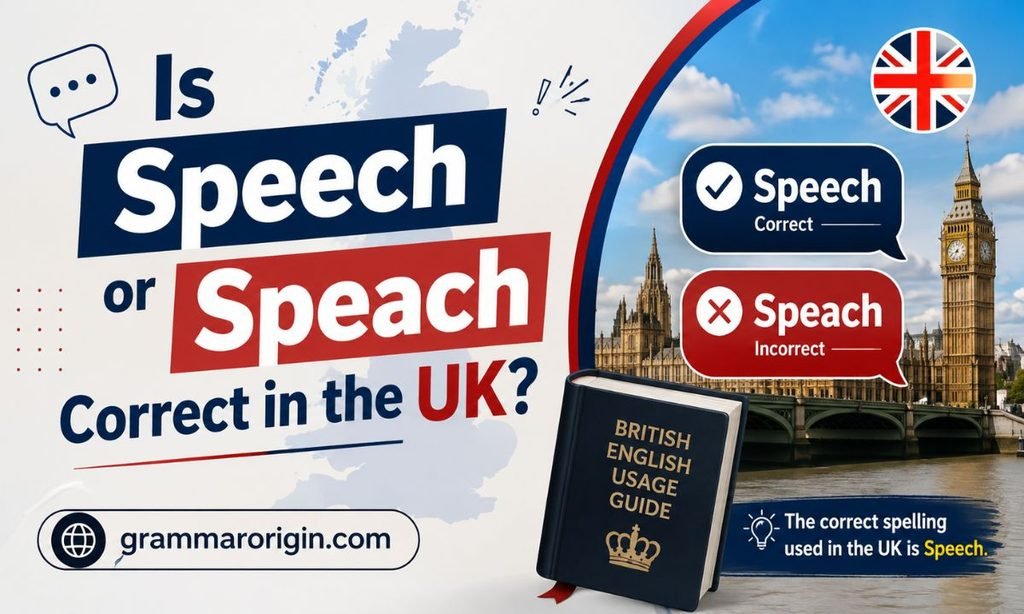
Speech is correct in UK English, exactly as it is in the US. There’s no regional variant here at all.
British dictionaries, including Oxford and Cambridge, list only the two-E spelling. Whether you’re writing for a British audience or an American one, the word stays the same.
Common Mistakes with Speech
1. Writing “Speach”
This is the most frequent error tied to the word, usually from assuming it follows the same pattern as “speak.”
2. Pronunciation Confusion
Some writers guess the spelling based on how the word sounds, and the “ee” sound doesn’t offer any obvious clue about the correct letters.
3. Typing Fast
Quick typing on a phone often locks in the wrong spelling before autocorrect gets a chance to catch it.
4. Ignoring Spell Check
Skipping a quick proofread lets small errors like this one slide straight into a final draft.
5. Copying Wrong Spelling
Seeing “speach” in someone else’s post or message can make the error feel normal, even though it never was correct.
Also Read This Atleast or At Least: Which Spelling Is Correct?
Speech in Everyday Examples
Public Speaking
- He gave a motivational speech to the new hires.
- Her closing speech earned a standing ovation.
School
- Students prepared speeches for the debate competition.
- The teacher corrected two spelling mistakes in his speech.
Social Media
- Her speech clip went viral within a day.
- Best speech I’ve heard all year.
Workplace
- The manager opened the meeting with a short speech about quarterly goals.
- Her speech to the board covered the entire budget plan.
Synonyms of Speech
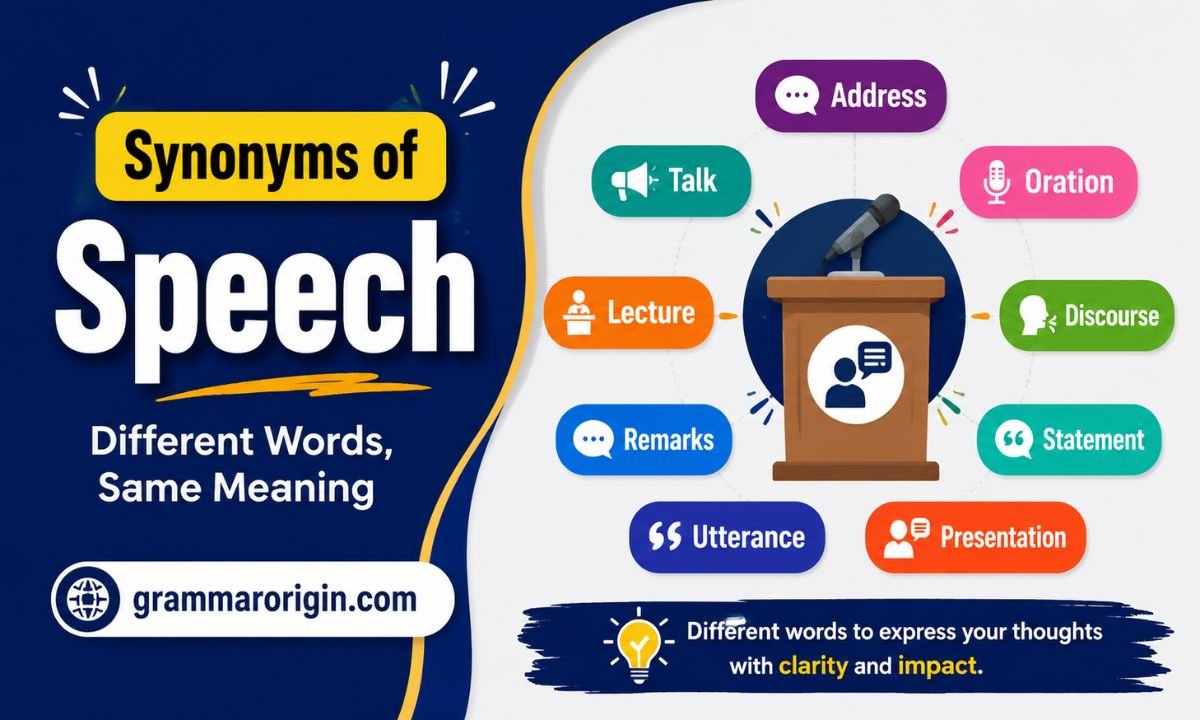
Repeating “speech” throughout a piece of writing can feel repetitive, so a few close alternatives come in handy.
- Address: a formal speech, often at an event or ceremony
- Talk: a more casual version of a speech
- Lecture: an educational or instructional speech
- Oration: a formal, often rehearsed public speech
Each of these swaps in cleanly depending on how formal the setting is.
Speech and Text-to-Speech: What’s the Connection?
Text-to-speech technology converts written words into spoken audio, and the correct spelling still applies to the tool’s name.
You’ll find “text to speech” built into phones, browsers, and accessibility tools, helping people listen to written content instead of reading it. The spelling never shifts to “speach,” even in casual tech writing or app descriptions.
Speeches, Speeched, Speeching: Are These Real Words?
Speeches is a real word, and it’s simply the plural of speech, used for more than one talk or address.
Speeched and speeching, on the other hand, don’t appear in standard dictionaries. Speech doesn’t function as a verb on its own; the related verb form is “speak,” not a version of “speech” with an added ending.
Speech: Google Trends & Usage Data
Trends
Searches for “speech” spike heavily around graduation season, election cycles, and school debate competitions.
Region Based Usage
| Region | Common Search Term |
| United States | speech |
| United Kingdom | speech |
| India | speech |
| Pakistan | speech |
High Search Queries
- how to spell speech correctly
- speech vs speach difference
- is speach a word
- text to speech
- giving a speech
- short speech examples for students
Comparison Table: Speech vs Speach
| Feature | Speech | Speach |
| Spelling | Correct | Incorrect |
| Meaning | Exists | None |
| Usage | Accepted everywhere | Not accepted anywhere |
| Professional use | Yes | No |
Quick Spelling Quiz: Test Yourself
- She gave an amazing ______ at the wedding. (speech / speach)
- His ______ therapy sessions are going well. (speech / speach)
- The app reads text aloud using text-to-______ technology. (speech / speach)
Answers: 1. speech, 2. speech, 3. speech. If you picked speech every time, the spelling has already stuck.
Frequently Asked Questions
What is the difference between speech and speach?
Speech is the correct, dictionary-recognized spelling. Speach is simply a common misspelling with no meaning of its own.
What is the meaning of speech?
Speech means the act of speaking, or a formal talk delivered to an audience, such as a graduation or campaign speech.
Is “speech” or “speach” the correct spelling in the UK?
Speech is correct in both UK and US English. There’s no regional difference to account for here.
Is speach ever an accepted variant?
No. Speach has never been accepted in any major dictionary or style guide, past or present.
How do you pronounce speech?
It’s pronounced with a sharp “ee” sound, rhyming with “peach” or “teach.”
Why do so many people write “speach” by mistake?
Because “speak” has an “a” in it, writers assume “speech” should follow the same pattern, even though it doesn’t.
Can speech be used as a verb?
No. Speech is a noun. The related verb is “speak,” not “speech” with an added ending.
Final Thoughts
Speech and speach aren’t really two options to weigh against each other. Only speech is real, correct, and accepted in every form of writing.
Remember the double-E sound, picture “peach” with an “s” in front, and you’ll never second-guess this spelling again.

Muhammad Waqas is an English language teacher and grammar expert with over 8 years of experience helping students and professionals improve their writing skills. He specializes in English grammar, vocabulary, communication, and practical language learning. Through GrammarOrigin, Waqas shares clear, easy-to-understand content that helps readers write and speak English with confidence.